Where to stay in Split
The airport sits between Split and Trogir, and that changes the question. The Old Town is the draw but the hardest place to keep a car; the bay towns are closer to the airport and easier to drive from.
Last checked
How the areas differ
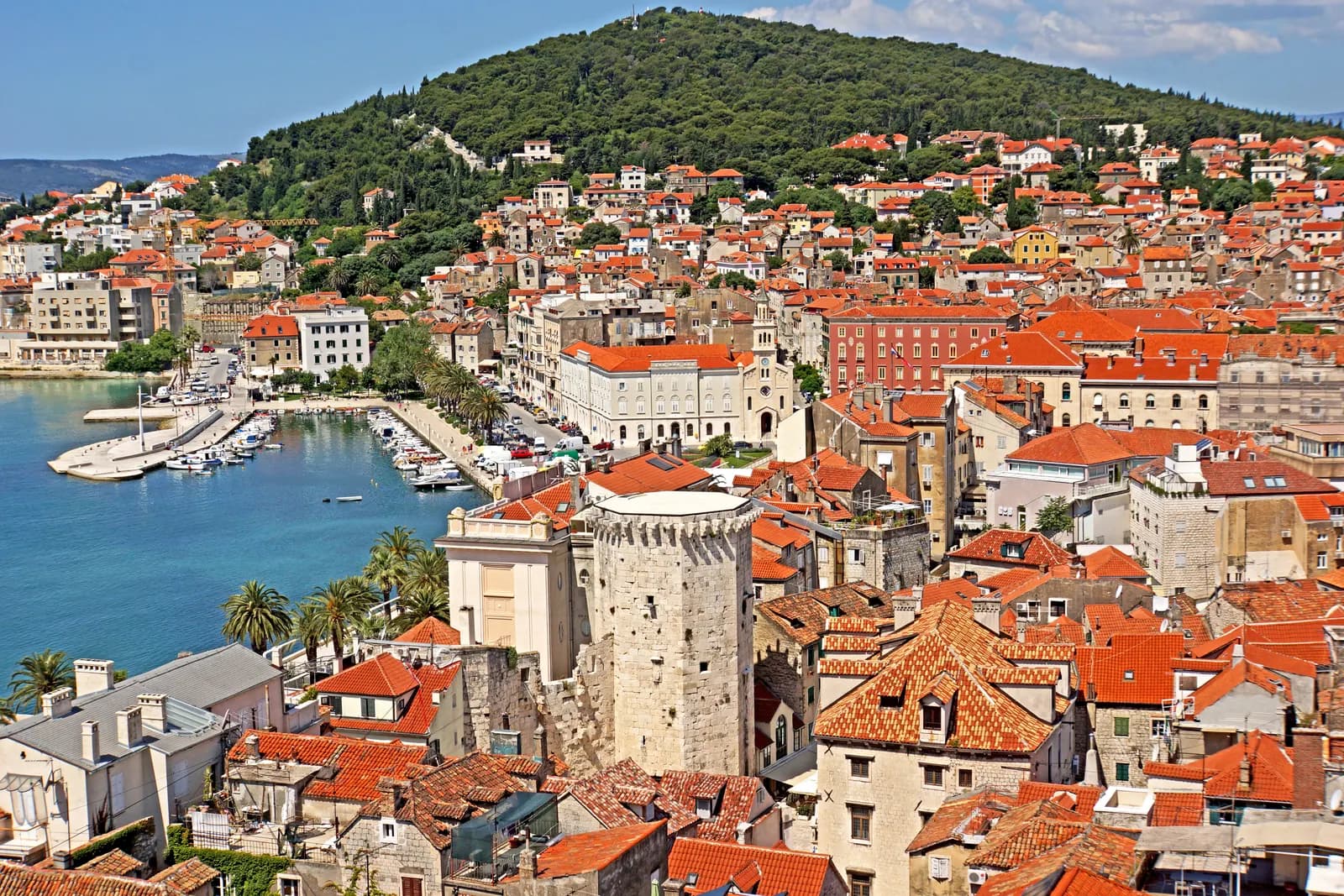
The Old Town, in and around Diocletian's Palace, puts the Riva, the markets and the ferry port on foot. Most stays are rooms and apartments in old stone buildings, plus small hotels, and summer brings crowds and noise.
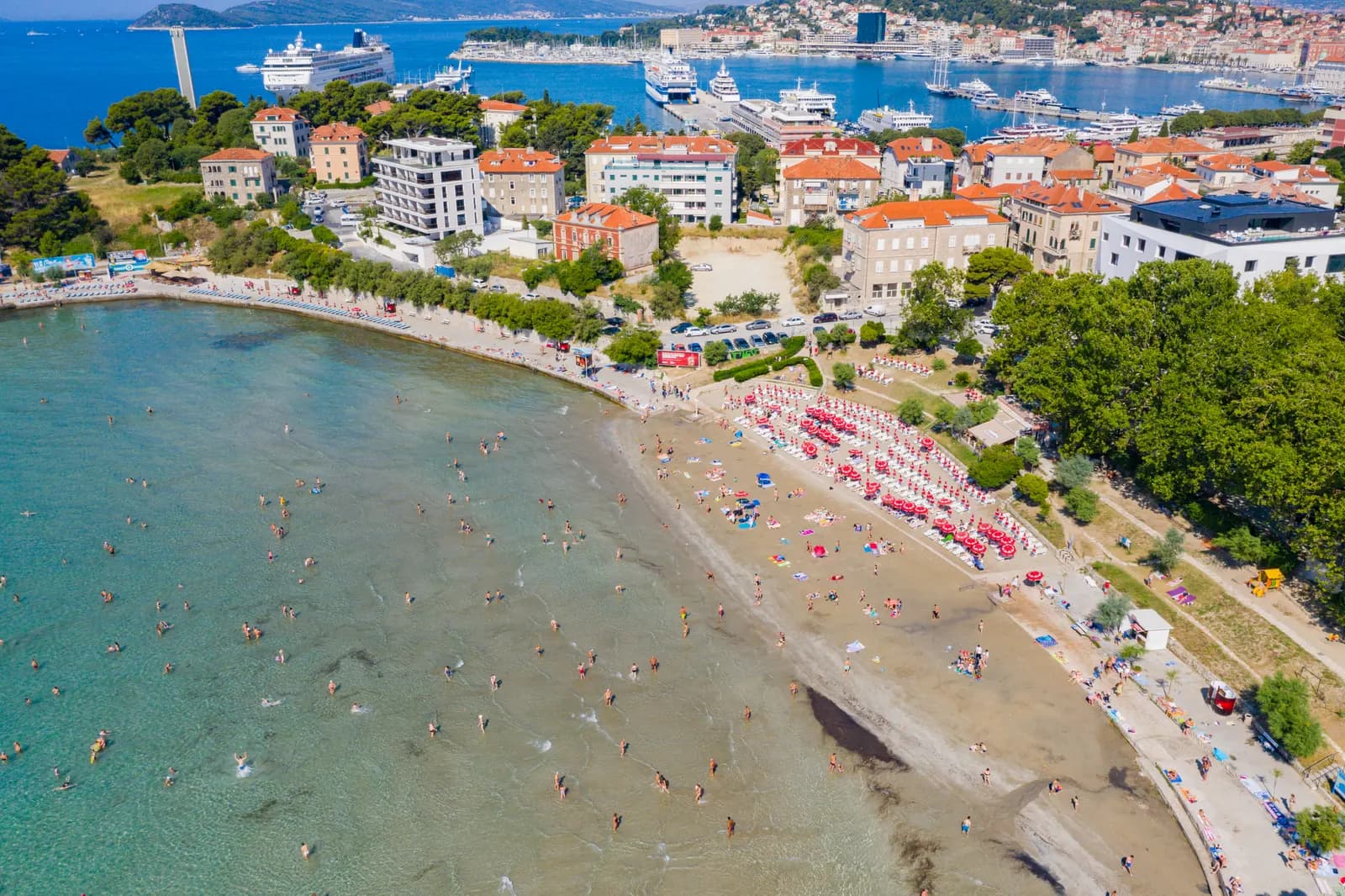
Bačvice, a short walk from the Old Town, is the city's sandy town beach, with nightlife and the ferry and bus stations close by. East of the centre, Žnjan is a district of newer residential blocks beside a long pebble beach, quieter and better suited to families and longer stays.
Outside the city, Kaštela is a string of seven seaside villages along the bay between the airport, Split and Trogir. Trogir is a small walled UNESCO-listed old town on an islet, about 5 km by road from the airport, with beaches on Čiovo next door.
Staying with a rental car
In Split, a car is a cost in the centre. Secondary sources describe Diocletian's Palace and the streets around it as pedestrian-only, and no city decision defining the zone was found. The car parks closest to the Old Town, on the Riva and at Stari plac, charge EUR 4 for the first hour and EUR 5 for each further hour from May to September, and EUR 2 and EUR 3 from October to April. Svačićeva, Vukovarska and Bijankinijeva charge EUR 1.50 an hour in summer and EUR 1.00 in winter.
Street parking is run by Split Parking and paid by SMS or app. Zone 1 costs EUR 1.20 an hour from 1 May to 30 September and EUR 0.80 otherwise, charged on weekdays from 06:30 to 21:30; zones 2 and 3 are cheaper and charged on weekdays from 07:00 to 19:00. All zones are charged on Saturday from 07:00 to 14:00, and Sunday is free. Split Parking garages in residential districts sell monthly passes at EUR 38.49 for individuals.
Parking rules in Kaštela and Trogir were not verified as of September 2026. The Croatian Auto Club lists the D8 coast road around Trogir and Split among its summer congestion points. For the drive south, GetCar's guide Split to Dubrovnik by Car: the Pelješac Bridge or the Road Through Neum compares the two routes and what each means for a rental car.
What the tourist tax and registration rules mean for a guest
The 2026 tourist tax for Split, set by the Split-Dalmatia County Assembly, is EUR 2.65 per person per night from 1 April to 30 September and EUR 1.86 the rest of the year in hotels and other commercial accommodation, paid to the provider. Trogir charges EUR 2.65 and EUR 1.33, Kaštela EUR 1.50 and EUR 1.00. Children under 12 are exempt, ages 12 to 18 pay half, and people staying in the area for work are exempt for the duration of the work with proof such as an employment contract. The county has already set 2027: Split and Trogir keep the same amounts, and Kaštela rises to EUR 2.00 and EUR 1.50.
Private household rentals, the usual form for holiday apartments let by individuals, work differently: the host pays an annual lump sum per bed, and the guest is not charged a per-night tax by law. The hospitality act requires the host to display in each unit that the tourist tax is included in the price.
Every host must register each guest in the eVisitor system within 24 hours of arrival, and foreign guests are passed on to the Ministry of the Interior automatically. UK travel advice adds that if the provider cannot register a visitor, the visitor must do so at a police station. A household host may advertise only the type and star category in its official decision, which is a fair check on a listing.
Since 1 January 2025 a flat in an apartment building needs the co-owners' prior written consent for short-term rental before a permit is issued, and hosts already operating in such buildings have five years to obtain it. New permits also follow any decision of the city council on the number, type and capacity of accommodation in all or part of the city; whether Split has adopted one was not verified as of September 2026.
When to book what
Dates move two prices: the per-night tourist tax is higher from 1 April to 30 September, and the Old Town car parks and zone 1 street parking are dearer from 1 May to 30 September. For an island day, the car ferry from Split to Stari Grad on Hvar reserves a place on a chosen departure, while the Split to Supetar line to Brač takes no reservations, so the Hvar crossing is the one to book ahead.
Which area for which trip
A short first visit on foot: the Old Town.
The town beach and nightlife: Bačvice.
A family stay or a longer stay by a pebble beach: Žnjan.
A road-trip base between the airport, Split and Trogir: Kaštela.
A small old town near the airport: Trogir.
Questions
Is it better to stay in Split or Trogir?
Split's Old Town for walking to the Riva, the markets and the ferries; Trogir for a smaller walled old town about 5 km by road from the airport. Split's centre is harder to keep a car in.
How much is parking by the Old Town in Split?
The Riva and Stari plac car parks charge EUR 4 for the first hour and EUR 5 for each further hour from May to September, and EUR 2 and EUR 3 from October to April. Zone 1 street parking is EUR 1.20 an hour in summer.
Is parking free on Sundays in Split?
Street parking in Split Parking zones is not charged on Sundays, and on Saturdays only from 07:00 to 14:00.
Do guests in a private apartment pay tourist tax per night?
Not by law. In private household rentals the host pays an annual lump sum per bed and must display in each unit that the tax is included in the price.
Is the tourist tax lower outside Split?
In Kaštela it is, at EUR 1.50 per person per night in commercial accommodation from 1 April to 30 September and EUR 1.00 otherwise; for 2027 the county raised Kaštela to EUR 2.00 and EUR 1.50, still below Split. Trogir matches Split in season.