A month in Split
A month in Split can be a long holiday booking or a written residential lease. The tourist tax, the registration and the parking all look different over a month than over a week.
Last checked
What a month costs to set up
No official statistic on monthly rents in Split was found, and neither were typical deposits or utility arrangements, so this guide gives no figures. What can be said is where the costs sit.
On Airbnb, 28 nights or more is a monthly stay: the first month is charged up front and released to the host 24 hours after check-in, and later months are charged 10 days before each period.
The tourist tax depends on the accommodation. In hotels and other commercial accommodation in Split it is charged per person per night, EUR 2.65 from 1 April to 30 September and EUR 1.86 otherwise, so a month adds up. In a private household apartment the host pays an annual lump sum per bed, the guest owes no per-night tax by law, and the host must display that the tax is included in the price. People staying for work are exempt for the duration of the work, with proof such as an employment contract.
For a car, Split Parking garages sell monthly passes at EUR 38.49 for individuals, in residential districts such as Pujanke, Sukoišan and Brodarica.
The areas that suit a month
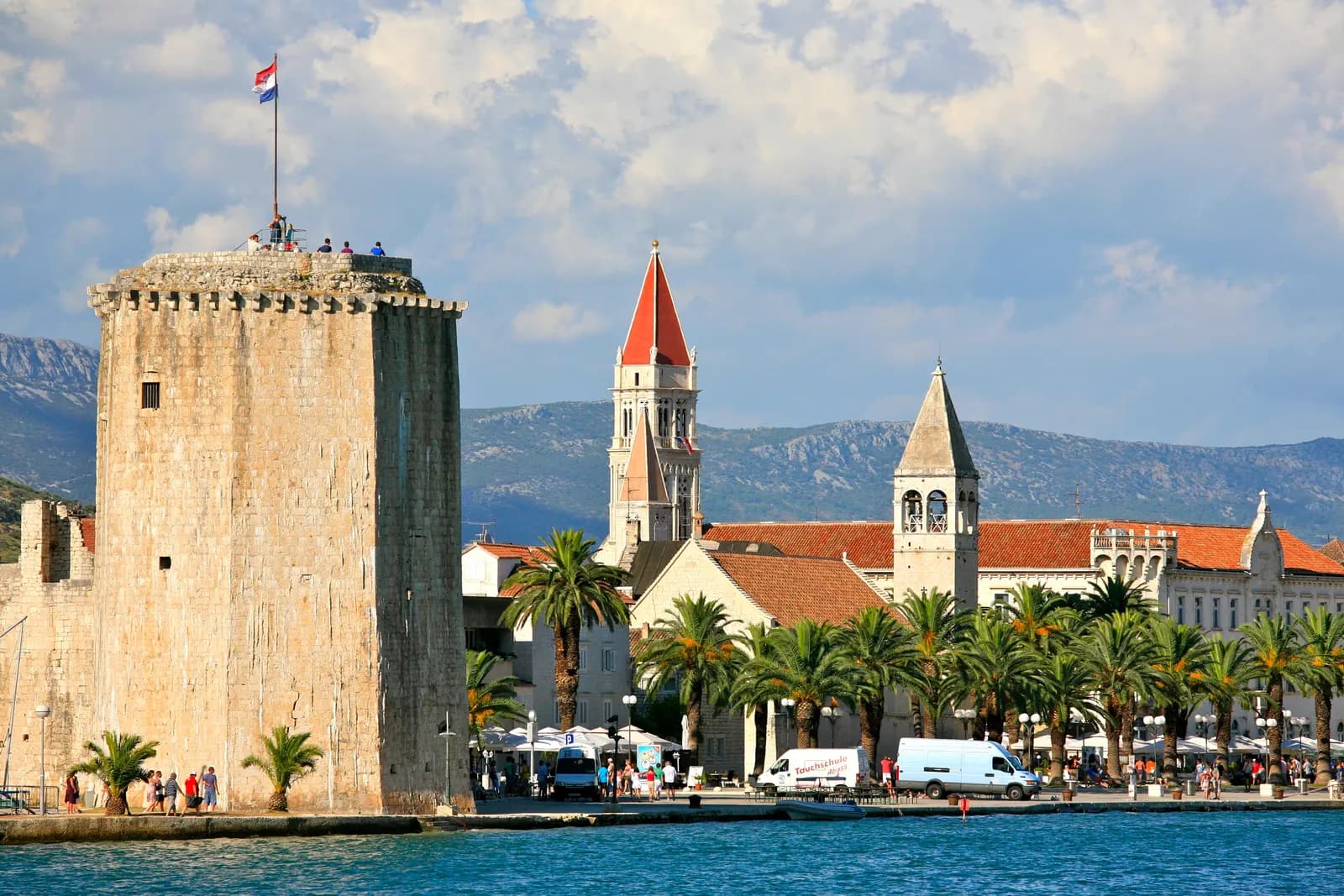
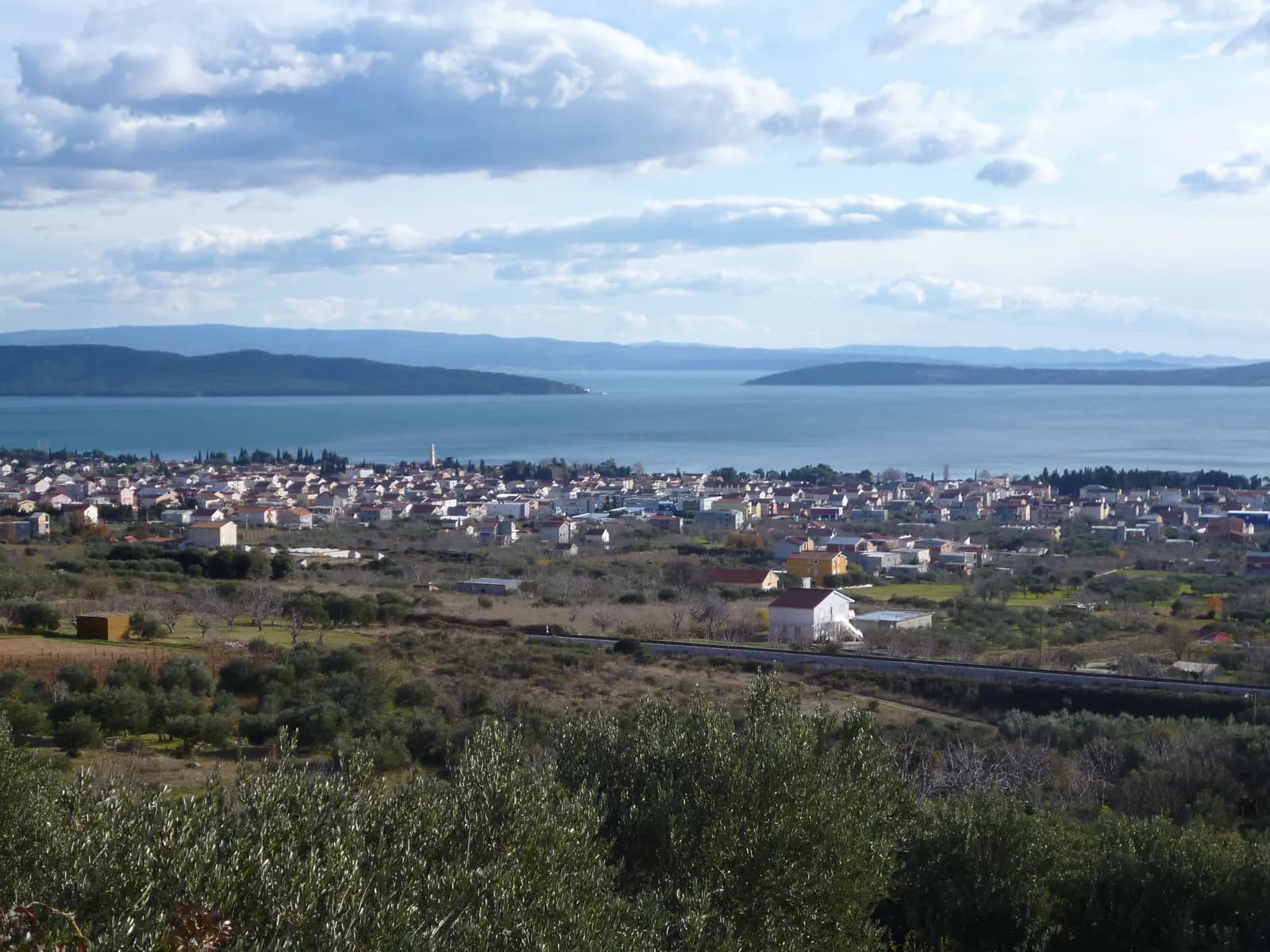
Žnjan suits a month best within the city: residential, beside a beach, outside the historic core and close to garages with monthly passes. Kaštela sits between the airport, Split and Trogir with a lower hotel tourist tax than Split. Trogir suits a month for anyone who wants to be near the airport.
The Old Town is the weakest monthly base for a guest with a car: the core is described as pedestrian-only, and the nearest car parks charge EUR 4 to 5 an hour in summer.
The paperwork
The host registers the guest in eVisitor within 24 hours of arrival, whatever the length of stay.
Croatia has fully applied the Schengen rules since 1 January 2023 at land and sea borders and since 26 March 2023 at airports. Visitors from outside the EU may stay up to 90 days in any 180-day period, counted across the whole Schengen area. UK travel advice warns that overstaying can bring a Schengen ban of up to three years. The EU Entry/Exit System has been fully operational since 10 April 2026, so non-EU travellers are registered at the border.
EU and EEA citizens staying more than three months must register a temporary stay with the police where they live, no later than eight days after the three months run out.
What platforms and the law call a long stay
Airbnb calls 28 nights or more a monthly stay. How other platforms name or filter long stays in Split was not verified.
Croatian law has a separate act for residential leases, the Zakon o najmu stanova. A lease under it must be in writing and state the rent, which running costs the tenant pays and how, who lives there, the duration, maintenance and handover. The point at which a longer stay stops being tourist accommodation and becomes a residential lease could not be verified as of September 2026, so ask which of the two is on offer.
Pitfalls
A lease that is not in writing. The residential lease act requires writing, with the running costs and who pays them spelled out.
Assuming a private apartment adds a nightly tax. By law it does not: the host pays a yearly lump sum per bed and must display in the unit that the tax is included in the price.
Counting Schengen days only in Croatia. The 90 in 180 rule counts every day across the Schengen area.
Booking the Old Town for a month with a car. Garage passes in residential districts cost far less than the car parks by the Riva.
Questions
Is tourist tax charged on a month in Split?
In hotels and other commercial accommodation, yes: EUR 2.65 per person per night from 1 April to 30 September and EUR 1.86 otherwise in 2026. In a private household apartment the host pays an annual lump sum per bed instead.
Are people working in Split exempt from the tourist tax?
Yes, for the duration of the work, in a place where they have no residence, with proof such as an employment contract.
Does an EU citizen need to register for a long stay in Croatia?
Only beyond three months: then a temporary stay is registered with the police, no later than eight days after the three months run out.
Where can a car be kept for a month in Split?
Split Parking garages in residential districts sell monthly passes at EUR 38.49 for individuals.
How long can a non-EU visitor stay in Croatia?
Up to 90 days in any 180-day period across the Schengen area. The EU Entry/Exit System has been fully operational since 10 April 2026.