A month in Paris
A month in Paris is taxed night by night, not by the month. The lease that exists for long stays, the bail mobilité, is open only to people studying, training or moving for work.
Last checked
What a month means legally
France has a short furnished lease built for stays of this length. The bail mobilité runs from one to ten months, cannot be renewed or rolled over, and its term can be changed once by an amendment so long as the total stays within ten months. The owner is forbidden to ask for a deposit, though a guarantor is allowed, and the tenant can leave at any time with one month's notice given by registered letter, by a commissaire de justice or by hand. A plain email does not count.
The catch is who may sign one. The tenant has to be in professional training, in higher education, on an apprenticeship contract, on an internship, in civic service, on a professional transfer or on a temporary mission, and has to prove it with a document. A holiday month does not qualify, so it stays an ordinary tourist let: a meublé de tourisme with a registration number in the listing, booked the same way as a week.
That matters for the host as well. A main residence may be let as a meublé de tourisme for at most 120 nights in a calendar year, and never for more than 90 consecutive nights to the same guest, whatever the commune. A two-month booking in someone's own flat is already close to both limits.
The tax on a month
The taxe de séjour is charged per adult per night, and the Paris rate sheet sets no ceiling on the number of nights. A month in a three-star hotel is 30 times EUR 5.53 per adult; in a four-star it is 30 times EUR 8.45. Minors pay nothing at any rating.
An unclassified flat, which is what most whole-flat listings are, is charged at 5 per cent of the cost of the night per person before tax, plus the departmental and regional additions, capped at EUR 15.93 per adult per night. Because the cost per person divides the night by every traveller, children included, the same flat costs less tax per adult when more people stay in it. The city publishes a simulator for the calculation.
The figure the host collects already contains the 10 per cent departmental addition and the two regional additions the State created, 15 per cent for the Société du Grand Paris and 200 per cent for Île-de-France Mobilités. There is no separate line to pay later.
Paperwork and entry limits
A guest who is not a French national fills in a fiche de police at check-in, in a hotel and in a flat alike. The host keeps it for six months and hands it to the police or the gendarmerie on request.
Non-EU visitors, which includes British and American travellers, may stay 90 days in any 180 across the whole Schengen area, and the EU Entry/Exit System has registered those short stays since 10 April 2026. A month in Paris after a month elsewhere in Schengen counts against the same allowance. Anything beyond 90 days needs a French long-stay procedure. EU and EEA citizens travel on an identity card or a passport and need no visa.
The ministry's 2025 guide set May 2026 as the date every meublé de tourisme in France had to hold a registration number issued through one national portal; whether that portal is live was unverified as of September 2026. The number must appear in every listing, including on a platform. A listing for a month that cannot show one is worth questioning before a deposit is paid.
The areas and the parking that suit a month
Street parking cannot hold a car for a month: a visitor may stay six consecutive hours on one space, in zone 1 and zone 2 alike. Anything longer belongs in a car park, and the City publishes a map of its concession car parks with each operator's tariffs, which it updates quarterly and describes as indicative.
Four of those car parks sell a resident subscription to anyone living in Paris, whatever their address: Université Diderot and Watt in the 13th, Porte d'Orléans in the 14th and Foch in the 16th. Three of the four sit in the south of the city, which is one reason Montparnasse and the 15th suit a month with a car. Zone 2 also halves the cost of the occasional hour at the kerb.
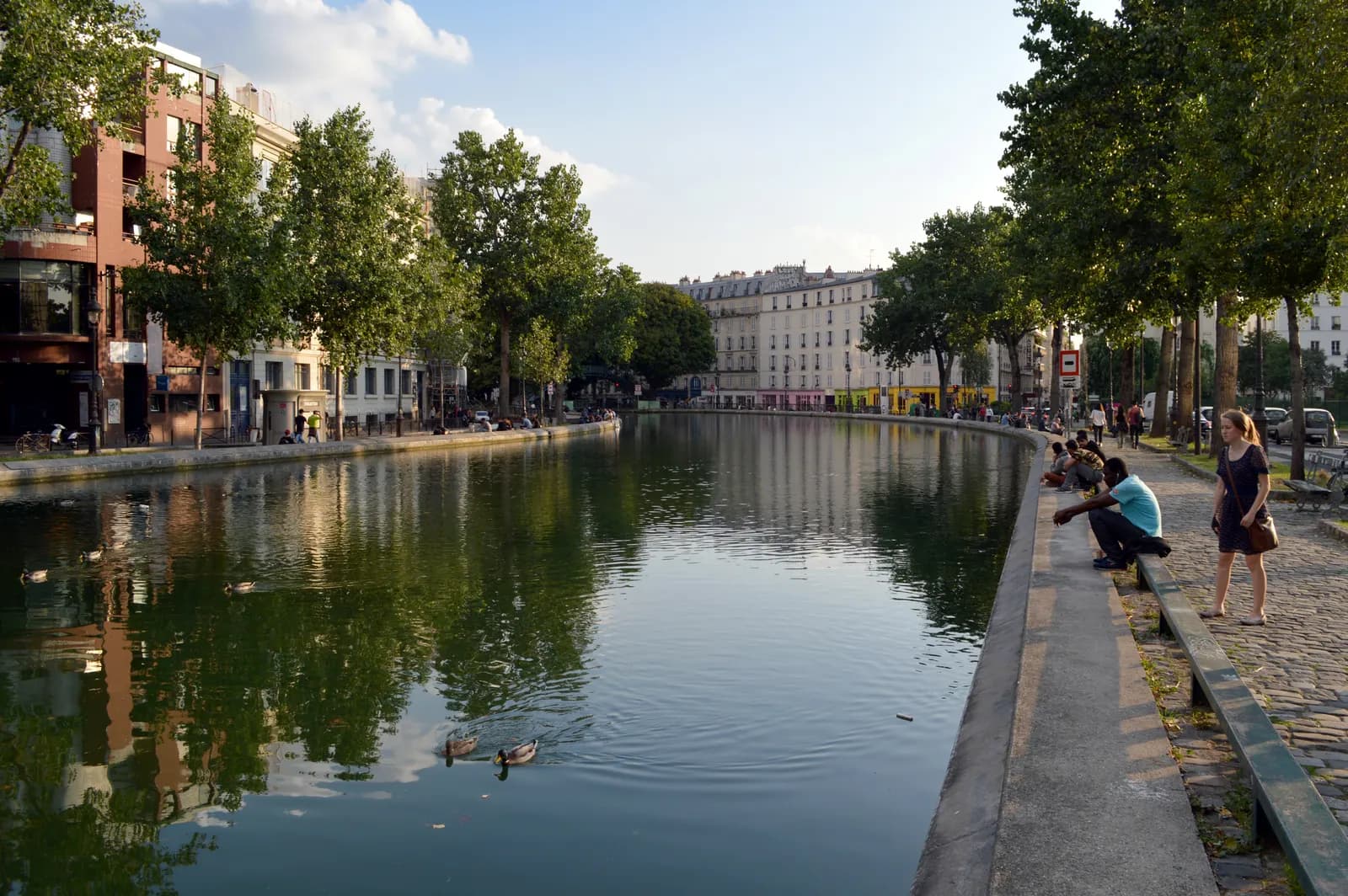
For a month without a car, the Canal Saint-Martin, République and Bastille give a residential quarter with the centre a short ride away, and Montmartre gives the view at zone 2 prices. Whatever the quarter, ask the host where the car can stand before booking, because a Paris flat rarely comes with a space.
What the platforms call a long stay
Airbnb calls 28 nights or more a monthly stay. It charges the first month up front and releases it to the host 24 hours after check-in, then charges each later month 10 days before it starts. None of that changes the taxe de séjour: the city charges per adult per night either way, and the platform collects it when it takes the payment.
How other platforms word their long-stay terms for Paris was not verified as of September 2026.
Pitfalls
Assuming a bail mobilité is available. It is open only to study, training and work mobility, and the owner may ask for the document that proves it.
Expecting the tourist tax to stop after a few weeks. The Paris rate sheet caps the rate, not the number of nights.
Booking a large car for a month. Over 1.6 tonnes the street tariff triples, and a month of occasional kerb parking adds up faster than the fuel.
Counting Schengen days only in France. The 90 days in 180 run across the whole area, and the Entry/Exit System now records them.
Taking a listing without a registration number. Every meublé de tourisme must show one in the listing.
Questions
Is the tourist tax charged on a month in Paris?
Yes, on every night and per adult. A three-star room is EUR 5.53 a night per adult and an unclassified flat 5 per cent of the nightly cost per person before tax, capped at EUR 15.93.
Can a holidaymaker sign a bail mobilité?
No. It is reserved for professional training, higher education, an apprenticeship, an internship, civic service, a professional transfer or a temporary mission, and the tenant must prove it.
Does a bail mobilité need a deposit?
No. The owner is forbidden to ask for one, although a guarantor is allowed. The tenant can leave at any time with one month's notice in writing.
Where can a car stand for a month in Paris?
In a car park. Street bays allow six consecutive hours at most. Four city car parks sell a subscription to any Paris resident, three of them in the south and south-west of the city.
How long can a non-EU visitor stay?
90 days in any 180 across the Schengen area, registered by the EU Entry/Exit System since 10 April 2026. A longer stay needs a French long-stay procedure.