Where to stay in Miami
Miami Beach and the mainland are different cities with different parking, taxes and rental rules. The areas differ in what sits outside the door: the ocean, the bay, a tower district or a quiet planned city.
Last checked
How the areas differ
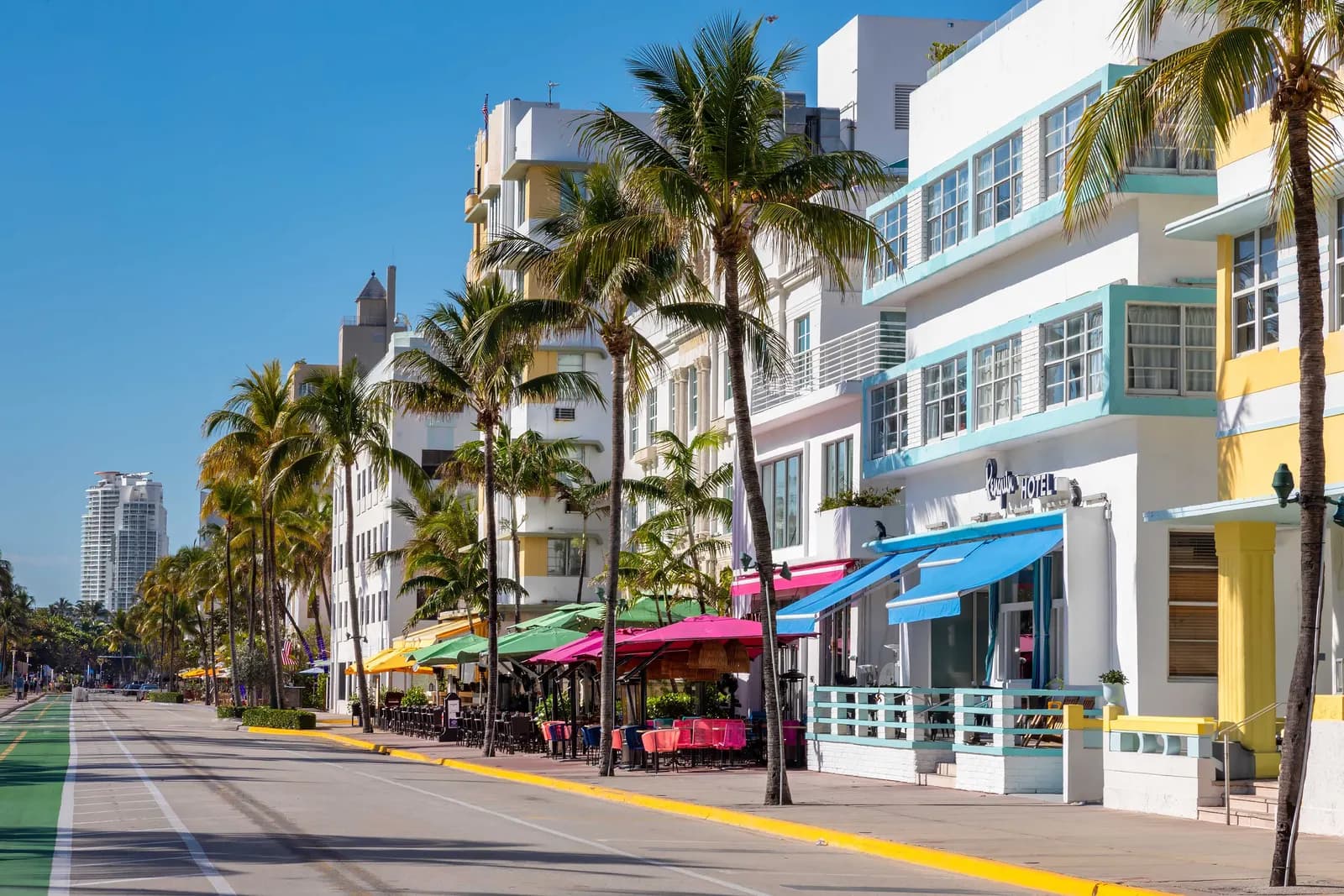
Miami Beach sits on barrier islands between Biscayne Bay and the Atlantic. South Beach, below Dade Boulevard, holds the Art Deco district, hundreds of hotels and apartment buildings from 1923 to 1943, and the pedestrian Lincoln Road. Mid-Beach is Collins Avenue from about 23rd to 44th Street, with the Fontainebleau and other oceanfront towers. North Beach runs from 63rd Street to 87th Terrace, with the Isles of Normandy and its own trolley loop.
On the mainland, Brickell is Miami's financial district, a neighbourhood of towers south of the Miami River, with Downtown and Bayfront Park on the other bank. Coconut Grove, the oldest continuously inhabited neighbourhood of Miami, runs along the bay south of Brickell. Coral Gables is a separate, Mediterranean-themed planned city, about 7 km (4 miles) from the airport by road. Key Biscayne is a village on its own island, next to Crandon Park's two-mile beach and Bill Baggs Cape Florida State Park.
From Miami International, Coral Gables is the closest area, Coconut Grove and Brickell about 12 to 13 km (8 miles) away, South Beach and Mid-Beach about 18 km (11 miles), North Beach about 22 km (14 miles) and Key Biscayne about 24 km (15 miles).
Staying with a rental car
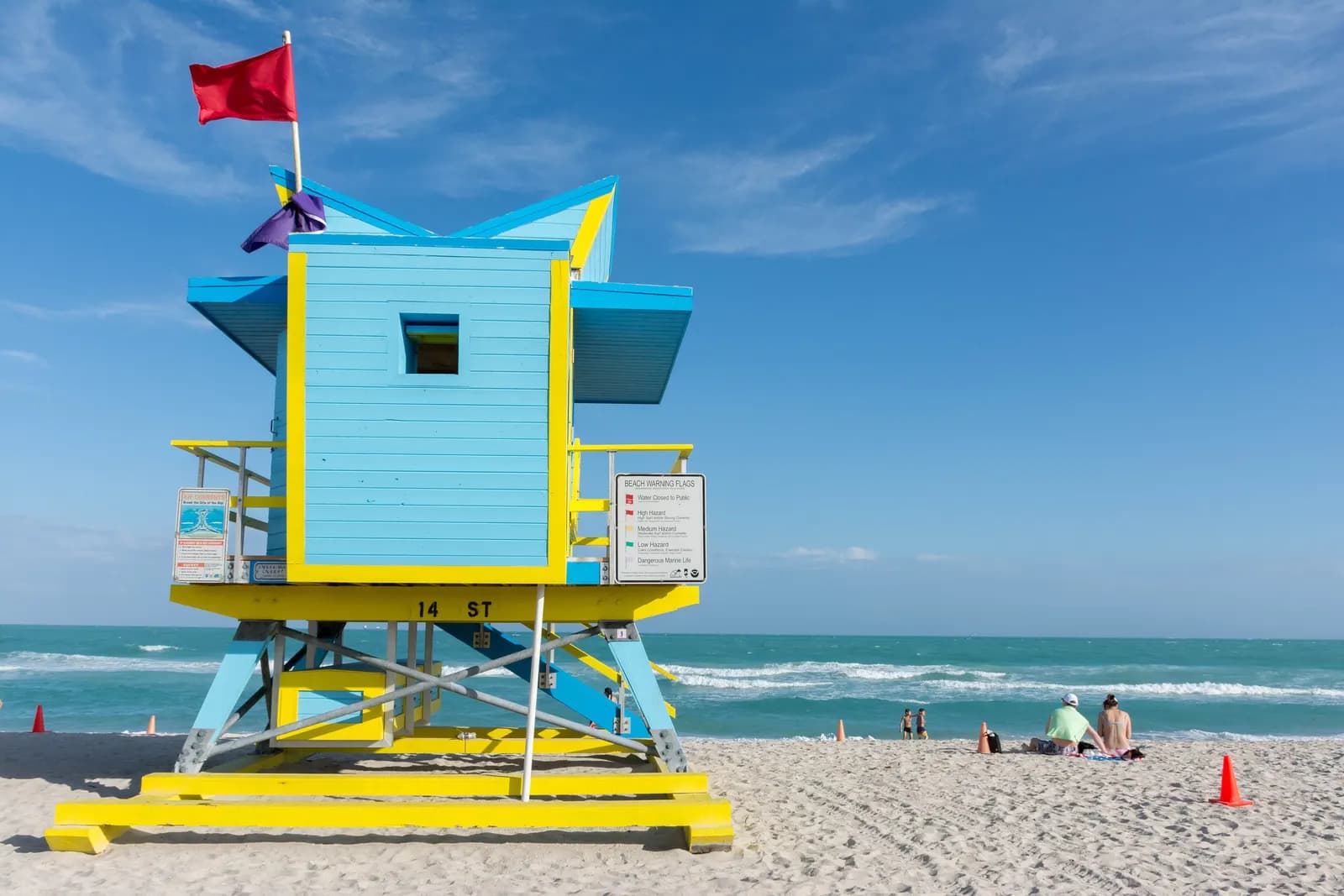
Miami Beach charges by zone. Street parking costs USD 4 an hour in South Beach, around the clock between Ocean Drive and Pennsylvania Avenue from 5th to 15th Street and from 9 a.m. to 3 a.m. elsewhere; USD 3 an hour in the Mid-Beach blocks between Collins Avenue and Indian Creek; and USD 1 an hour in North Beach. City garages cap at USD 20 a day, and the 42nd Street garage at USD 8. Drivers pay by plate with ParkMobile or PayByPhone.
Residential permit zones are for residents with a Florida driver's licence and a Florida registration at an address in the zone, so a rental car parked there can be towed. Since 1 January 2026 a tow costs USD 274 plus a USD 150 administrative fee, for a tow from a public street the towing companies take cash, cashier's cheques, money orders or traveller's cheques from visitors, and a renter needs the rental agreement and a letter from the rental company to get the car back.
On the mainland, the Miami Parking Authority takes payment by plate through ParkMobile and PayByPhone (via GetCar). Coral Gables garages charge USD 1 per 24 minutes up to USD 18 a day. The Rickenbacker Causeway, the only road onto Key Biscayne, has a toll plaza near Brickell Avenue. Hotels set their own parking charges, and no official source lists them, so ask before booking.
Rental companies bill tolls through their own programmes, with their own fees. GetCar's guide Driving in Miami: the Rental Car Center and the MIA Mover, the Metered Taxis, the Cashless Expressways and the Rental Toll Trap, Miami Beach Parking and Towing, the Overseas Highway covers the roads in full.
Room taxes and rental rules for a guest
Florida charges 6% sales tax on stays of six months or less, added to the rent, and Miami-Dade adds a 1% surtax. The county adds 6% more: a 3% convention development tax, a 2% tourist development tax and a 1% sports facilities tax. The last two are not collected in Miami Beach, which charges its own 4% resort tax, so a room pays 14% in Miami Beach and 13% in the City of Miami, Coral Gables and Key Biscayne. In Surfside and Bal Harbour, north of Miami Beach, none of the three county taxes applies, and the state's table lists a 4% local rate there. The county has agreements with Airbnb, with HomeAway and its affiliates such as Expedia and Vrbo, and with misterb&b to collect these taxes for hosts.
Florida licenses a vacation rental, a home or condo rented more than three times a year for less than 30 consecutive days. The 2026 statutes require the licence, and no rule putting its number on listings was found.
Miami Beach bans rentals shorter than six months and one day in all single-family homes and in many apartment buildings. A legal rental holds a city Business Tax Receipt and a resort tax account and must show both numbers in every listing, and the city's website has a lookup for guests. The city says that guests of a rental operating without that authorisation will be evicted. In the City of Miami, short-term means up to 30 days, and single-family homes and duplexes in the T3 and T4-R zones are generally ineligible.
When to book what
The Atlantic hurricane season runs from 1 June to 30 November, with its peak around 10 September. Florida's emergency management agency publishes evacuation zones by address, with Zone A the first to evacuate, so the address of a stay can be checked before booking in those months. Once the Governor declares a state of emergency, Florida law bars unconscionable prices, in the declared area, for a dwelling needed as a direct result of the emergency, for up to 60 days unless extended.
From 1 August to 31 October 2026, Miami Beach charges USD 1 an hour at its lots, garages and meters through the ParkMobile app, up to 3 hours a session. Apply for the ESTA before buying flights. Then compare and book the stay with the taxes shown in the total.
Which area for which trip
A first visit built around the beach and the Art Deco district: South Beach.
Oceanfront hotels a few kilometres from the crowds: Mid-Beach.
Cheaper parking by the sea: North Beach.
A city stay without the car: Brickell and Downtown.
A leafy bayside base: Coconut Grove.
Early flights: Coral Gables. A family beach stay: Key Biscayne.
Questions
Is it better to stay in Miami or Miami Beach?
Miami Beach for the ocean and the Art Deco district, with parking charged by the hour in every zone. The mainland areas, Brickell, Coconut Grove and Coral Gables, suit a city stay and are 7 to 13 km from the airport by road.
How much tax is added to a room in Miami Beach?
14%: Florida's 6% sales tax, Miami-Dade's 1% surtax, a 3% county convention development tax and the city's 4% resort tax, on stays of six months or less.
How can a guest check that a Miami Beach rental is legal?
The listing must show the city's Business Tax Receipt number and resort tax certificate number, and the city's website has a lookup of authorised rentals and a list of authorised buildings.
Where is parking cheapest in Miami Beach?
North Beach and the western side of Mid-Beach, at USD 1 an hour on the street, and the 42nd Street garage, at USD 1 an hour up to USD 8 a day. From 1 August to 31 October the whole city charges USD 1 an hour through ParkMobile.
Which Miami area is closest to the airport?
Coral Gables, about 7 km by road. Coconut Grove is about 12 km and Brickell about 13 km.