A month in Miami
A month in Miami is still a short stay in Florida law: the room taxes apply for the first six months, and Miami Beach bans rentals shorter than six months and one day in most residential buildings. That decides where a month is possible.
Last checked

What a month is in Florida law
Florida taxes rentals of six months or less. The tax stops only for a guest with a written lease for longer than six months, or one who has lived in the same place for more than six months and paid the tax for six of them. A 30-night stay pays the same rates as a weekend: 13% in the City of Miami, Coral Gables and Key Biscayne, and 14% in Miami Beach.
A 2025 law, in force since 1 July 2025, settles what a stay is. Occupancy in a hotel, motel or vacation rental is transient unless a written agreement says that the unit is the guest's sole residence. Florida's landlord and tenant act, with its deposit rules, does not apply to transient stays, so the booking terms are what count. The operator can ask a guest who has not paid, or has not checked out by the time given in writing at check-in, to leave, and staying on after that request is a misdemeanour.
Under a residential lease, the landlord returns a deposit within 15 days of the end of the lease, or sends written notice of a claim within 30 days.
Miami Beach and City of Miami rules for a month
Miami Beach counts anything shorter than six months and one day as a short-term rental, and bans those in all single-family homes and in many apartment buildings. A one-month rental there is legal only in a hotel or in a building and zone the city authorises, and the listing must show the city's Business Tax Receipt and resort tax numbers. The city publishes a lookup and a list of authorised buildings, and says that guests of an illegal rental will be evicted.
In the City of Miami, which includes Brickell, Downtown and Coconut Grove, a short-term rental is one of up to 30 days, and single-family homes and duplexes in the T3 and T4-R zones are generally ineligible. A stay longer than 30 days falls outside that rule, but still pays the room taxes if it lasts six months or less.
The areas that suit a month
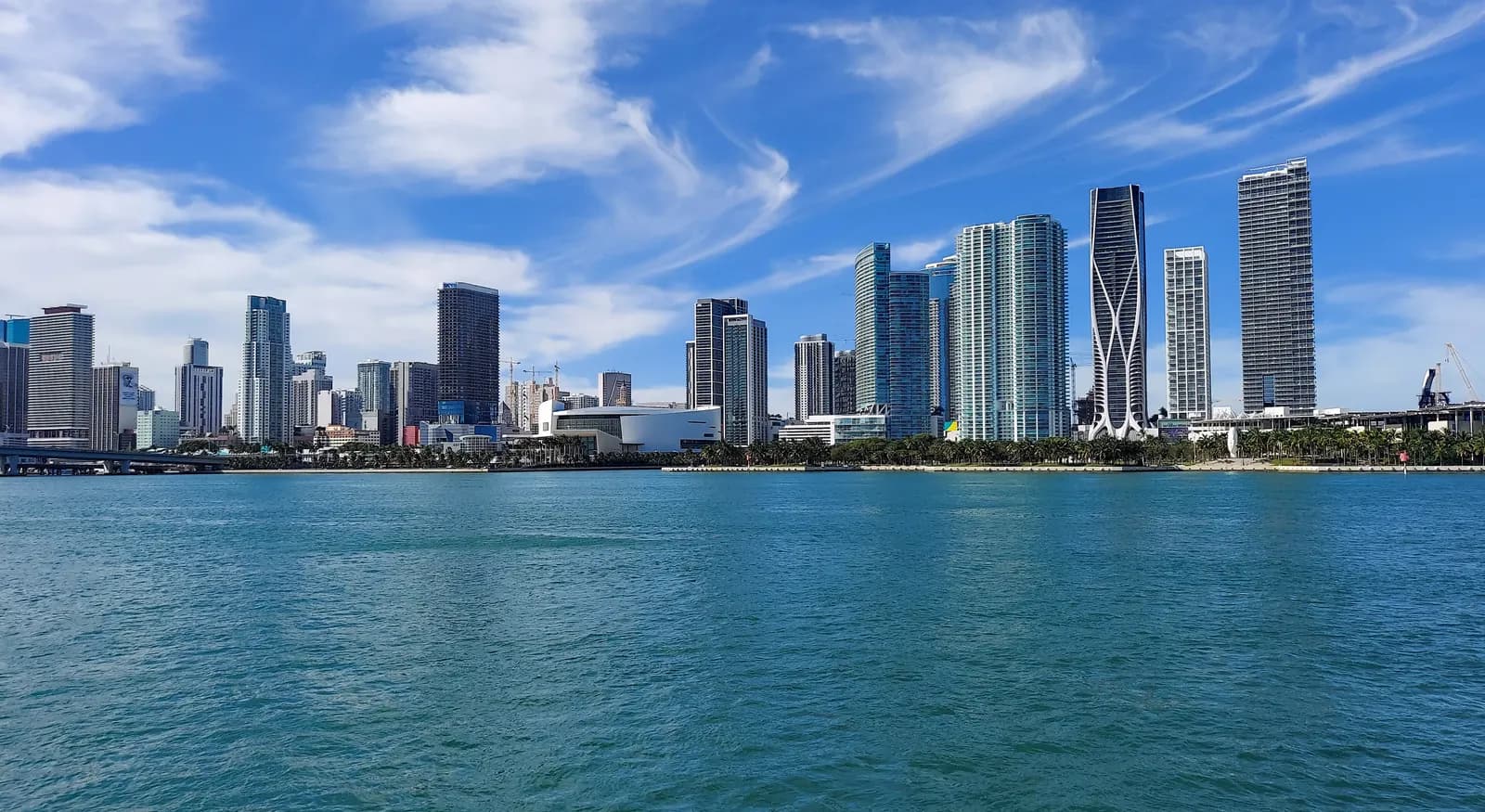
Brickell and Downtown suit a month without much driving: the Metromover is free, Metrorail costs USD 2.25 a ride, and a one-month transit pass costs USD 112.50. Coconut Grove adds the bay and two Metrorail stations. Coral Gables is about 7 km (4 miles) from the airport, with monthly garage permits at USD 112.35 or USD 123.05. North Beach has the lowest street parking rate on Miami Beach, USD 1 an hour. These choices are editorial.
A car for the month
Miami Beach sells monthly garage and lot permits to non-residents, at USD 132 a month in most garages and USD 94 in the lots and the 42nd Street garage, plus 7% tax, but every garage and lot has a waiting list. Residential zone permits need a Florida driver's licence and a Florida registration at an address in the zone. A place with its own parking avoids both, so ask about it before paying for the month.
Rental companies bill tolls through their own programmes. A traveller with a SunPass Portable transponder can add the rental car's plate to the account for the rental dates.
Paperwork
Visitors from the 42 Visa Waiver Program countries, among them the UK and 24 of the 27 EU countries (not Bulgaria, Cyprus or Romania), can stay up to 90 days with an ESTA, which costs USD 40.27. The stay cannot be extended, and a side trip to the Bahamas, another Caribbean island, Canada or Mexico does not restart the 90 days. CBP records each arrival electronically, with an admit-until date that can be checked on its website.
Airbnb calls 28 nights or more a monthly stay. It charges the first month up front, later months 10 days before each period, and applies its long-term cancellation policy, which generally requires 30 days' notice of changes.
Pitfalls
Booking a month in a Miami Beach apartment building outside the authorised list. The six-month rule makes it illegal, and the city says guests are evicted.
Expecting the room taxes to stop after 30 nights. Only a written lease for more than six months, or six months of residence, ends them.
Parking in a residential zone with a rental car. The permits need a Florida licence and registration, and a tow costs USD 274 plus USD 150.
Assuming utilities, deposits or parking are included. No official source on local practice was found, so ask in writing before paying.
Questions
Do room taxes apply to a month in Miami?
Yes. Florida and Miami-Dade tax rentals of six months or less: 13% in the City of Miami, Coral Gables and Key Biscayne, and 14% in Miami Beach. A written lease for longer than six months ends them.
Can a tourist rent an apartment in Miami Beach for a month?
Only in a hotel or in a building and zone the city authorises. Miami Beach bans rentals shorter than six months and one day in single-family homes and many apartment buildings.
How long can a visitor stay in the US without a visa?
Up to 90 days for citizens of the 42 Visa Waiver Program countries, with an ESTA. The stay cannot be extended, and trips to Canada, Mexico or the Caribbean islands do not reset it.
Is a month in a vacation rental a tenancy in Florida?
Not unless a written agreement says the unit is the guest's sole residence. Florida treats stays in hotels and vacation rentals as transient, outside the landlord and tenant act.
Where can a car be kept for a month in Miami Beach?
In a city garage or lot with a monthly permit, USD 94 or USD 132 plus tax, after a waiting list, or at a place with its own parking. Residential permits are only for Florida-registered residents of the zone.