Skip to content
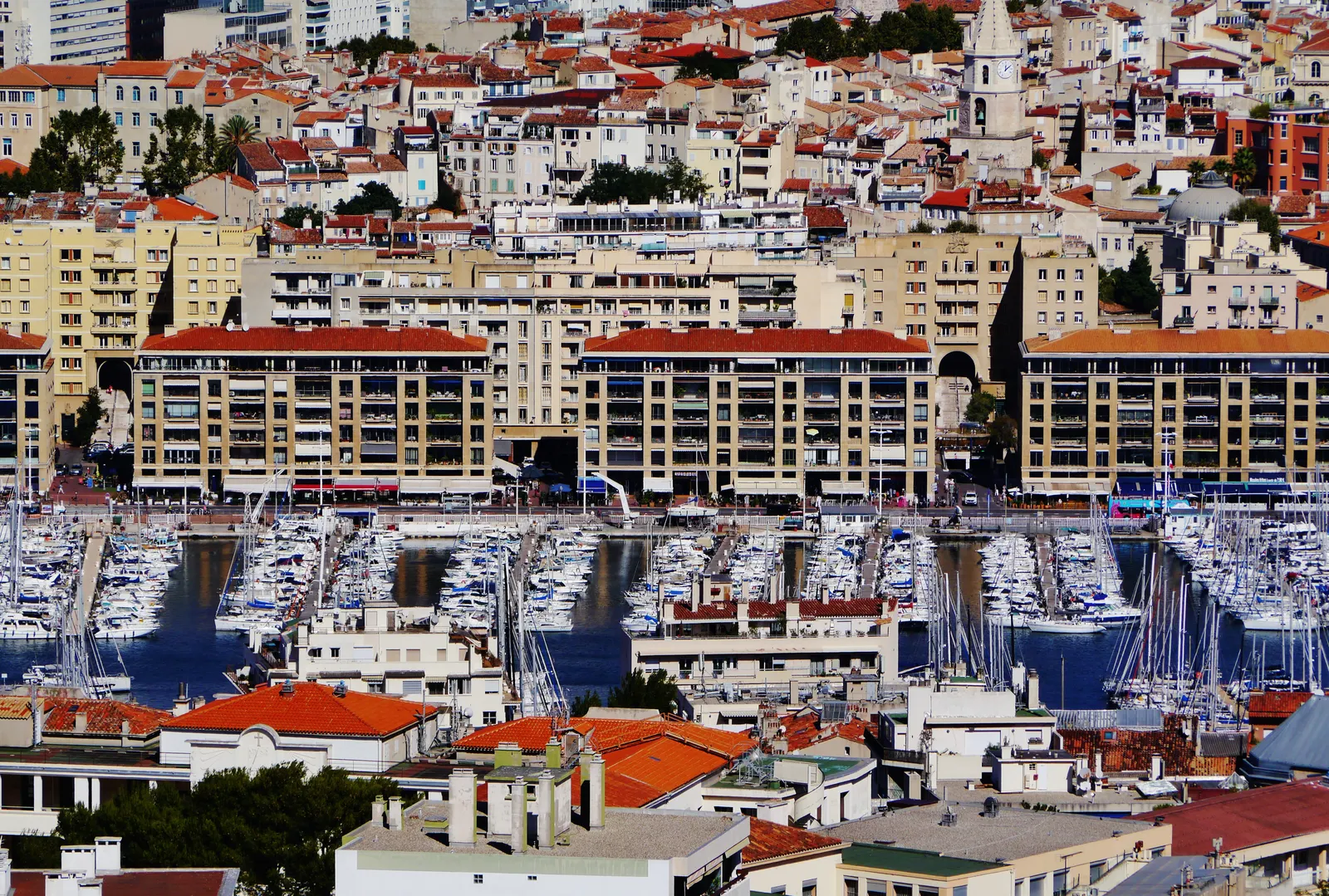
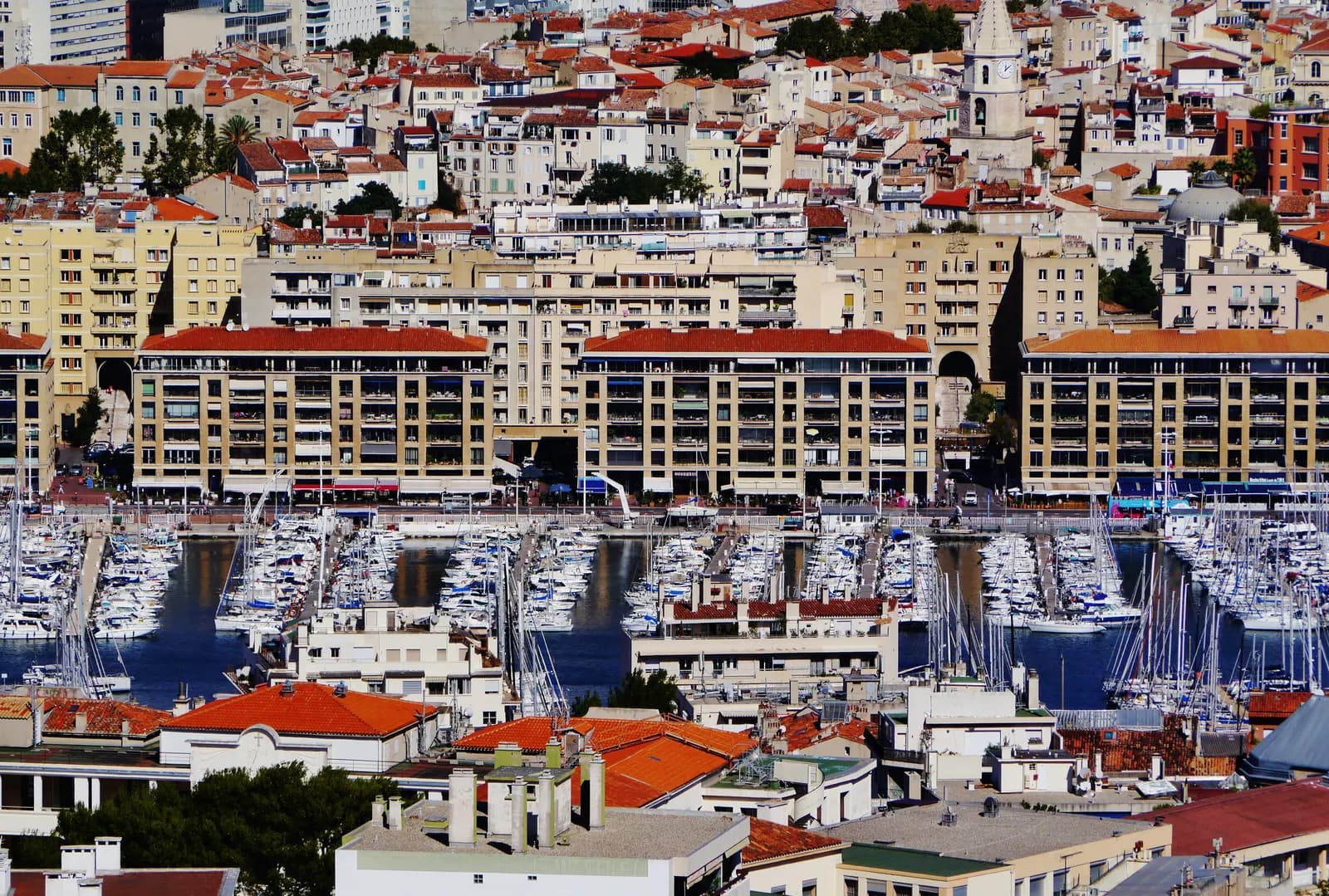
The Vieux-Port of Marseille packed with moored yachts, seen from the hill of Notre-Dame-de-la-Garde over the roofs of the old town

Where to stay in Marseille

Photographed in 2021. Photo: Zairon, CC BY-SA 4.0, via Wikimedia Commons

About Marseille

Marseille charges the tourist tax per person per night with two additions on top, limits a street space to four and a half hours in the paid zone, and closes the Calanques to everyone on a red fire-risk day.

France. Guide last checked .

Facts and rules

Last checked . Each fact links to its source.

Airport
Marseille Provence (MRS) at Marignane, about 25 km by road from the Vieux-Port. A shuttle, line A1, runs by motorway to Marseille Saint-Charles station. Source
Tourist tax
Rate sheet in force since 1 January 2023, per person per night, additions included: EUR 5.76 palaces, EUR 4.32 five stars, EUR 3.25 four stars, EUR 2.16 three stars, EUR 1.30 two stars, EUR 1.09 one star. Whether a later sheet replaces it was unverified as of September 2026. Source
Unclassified lodgings
On the 2023 rate sheet, 4% of the cost of the night per person excluding tax, 5.76% with the additions, capped at EUR 5.76 per person per night. Source
What the tax is made of
The city rate, a 10% departmental addition and a 34% addition created by the finance law for 2023 for the Société de la Ligne Nouvelle Provence Côte d'Azur. Source
On the invoice
The host displays the rates in the lodging and shows the tax on the invoice separately from its own services. It carries no VAT and the amount is not rounded. Source
Low-emission zone
19.5 km2 of the centre and 314,000 residents, bounded by the Cap Pinède, Capitaine Gèze, Plombières, Fleming, Duparc, Sakakini, Jean Moulin, Rabatau and Prado 2 boulevards. The métropole bars Crit'Air 4, 5 and unclassified vehicles. Source
ZFE fines and exceptions
EUR 68 for a light vehicle and EUR 135 for a lorry, bus or coach. The A55 flyover and the tunnels stay open to every vehicle, and the Crit'Air 3 step was postponed with no new date in June 2024. Source
The 2026 law
Parliament voted to repeal the articles that created the low-emission zones in the law of 26 May 2026, and the métropole still publishes its zone. Whether it is enforced was unverified as of September 2026. Source
Parking with a rental car
Paid Monday to Saturday 9am to 7pm except public holidays. The orange zone is the hyper centre and the yellow zone the ring around it: EUR 1.50 an hour, then EUR 4 or EUR 3 for two hours. Source
How long a car may stand
24 consecutive hours on one space anywhere in the city. Inside the paid zone, 4 hours 30 on a yellow or orange street and 2 hours 30 on a red one. The forfait post-stationnement is EUR 17. Source
Pollution peaks
From level 1 of an ozone or nitrogen dioxide alert, meter tariffs are doubled and residents paying directly at the meter are exempt in their own quarters. Source
The Calanques in summer
From 1 June to 30 September the prefecture rates each massif between 5pm and 6pm for the next day. On a red day land access to the national park is forbidden and no landing from a boat is allowed. Source
Sugiton booking
Free and compulsory in 2026 on 20 and 21 June, every day from 27 June to 30 August, 5 and 6 September and 12 and 13 September. Book from three days ahead at 9am until 6pm the day before, for up to five people. Source
Roads closed to cars
The chemin de la Gardiole has been shut to vehicles since 20 February 2019, Cap Croisette since March 2021 and the Port-Miou car park since July 2021, with barriers at Logisson, Callelongue, Les Baumettes and Sormiou. Source
Short-term rental rules
A meublé de tourisme is declared entirely online through the city's taxe de séjour site, which issues the registration number. Platforms collect the tax when they take the payment. Source
Check-in
A guest who is not a French national fills in a fiche de police. The host keeps it for six months and hands it to the police on request. Source
Short stays for non-EU visitors
90 days in any 180 across the Schengen area. The EU Entry/Exit System has been fully operational since 10 April 2026. Source
Currency
Euro (EUR). Source
Emergency numbers
112, ambulance 15, police 17, fire 18 Source

Areas of Marseille

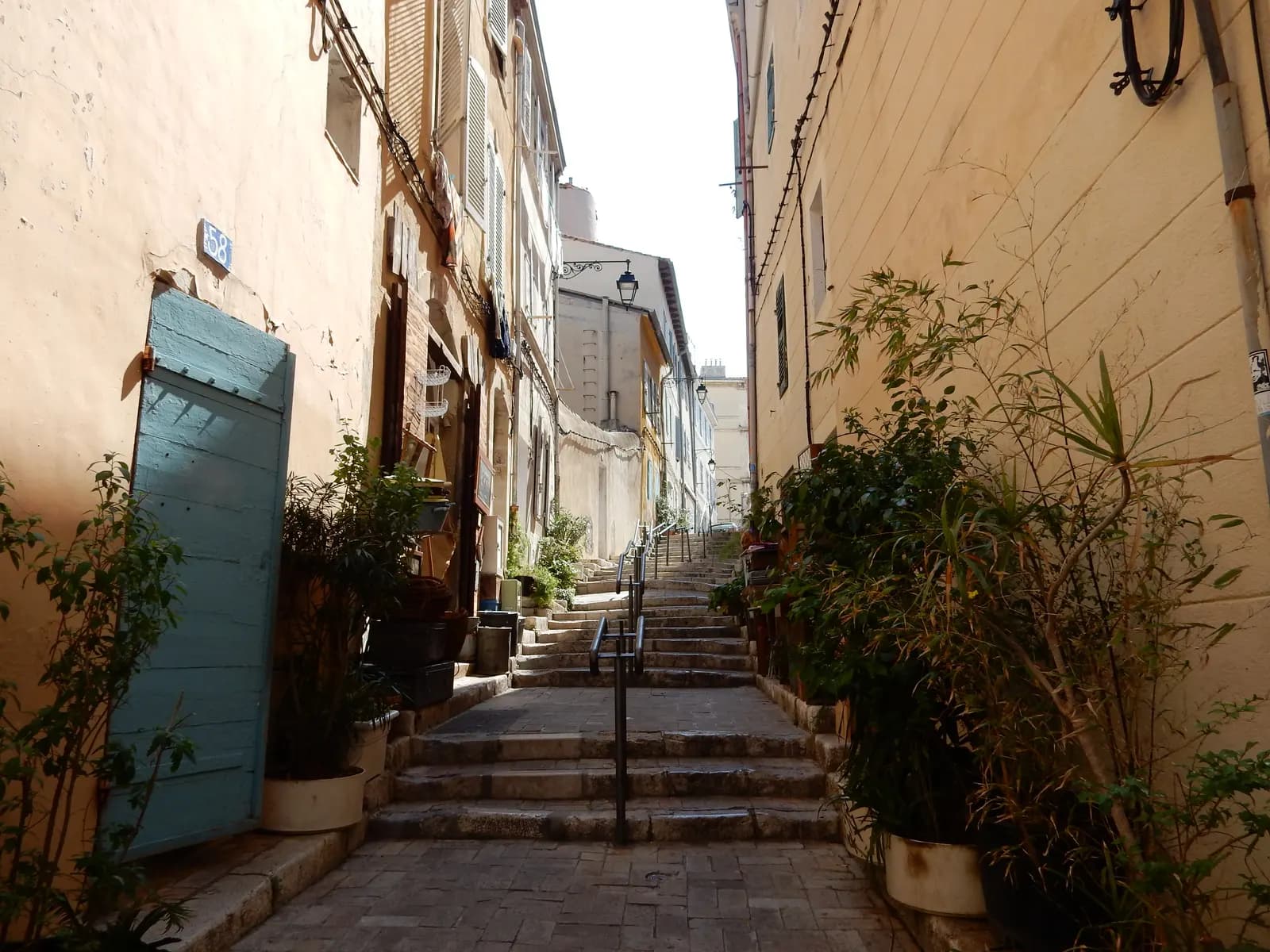
A narrow stepped lane in Le Panier in Marseille, with potted plants, shutters and lanterns along the house fronts and no room for a car
Photographed in 2018. Photo: Pmk58, CC BY-SA 4.0, via Wikimedia Commons

Le Panier and the Vieux-Port

The oldest quarter, a slope of narrow stepped lanes above the harbour, with the Vieux-Port and its moored yachts below. Many of its lanes are stairs with no carriageway at all, so it suits a stay made entirely on foot.

Marseille Provence airport
about 26 km
Vieux-Port
under 1 km

Car and parking

Inside the low-emission zone, where the métropole bars Crit'Air 4, 5 and unclassified vehicles from driving or parking. Street parking is charged Monday to Saturday 9am to 7pm; the hyper centre is the orange zone at EUR 1.50 an hour, EUR 4 for two hours and EUR 8 for four, with a EUR 17 charge beyond the limit and 24 consecutive hours as the city-wide maximum on one space.
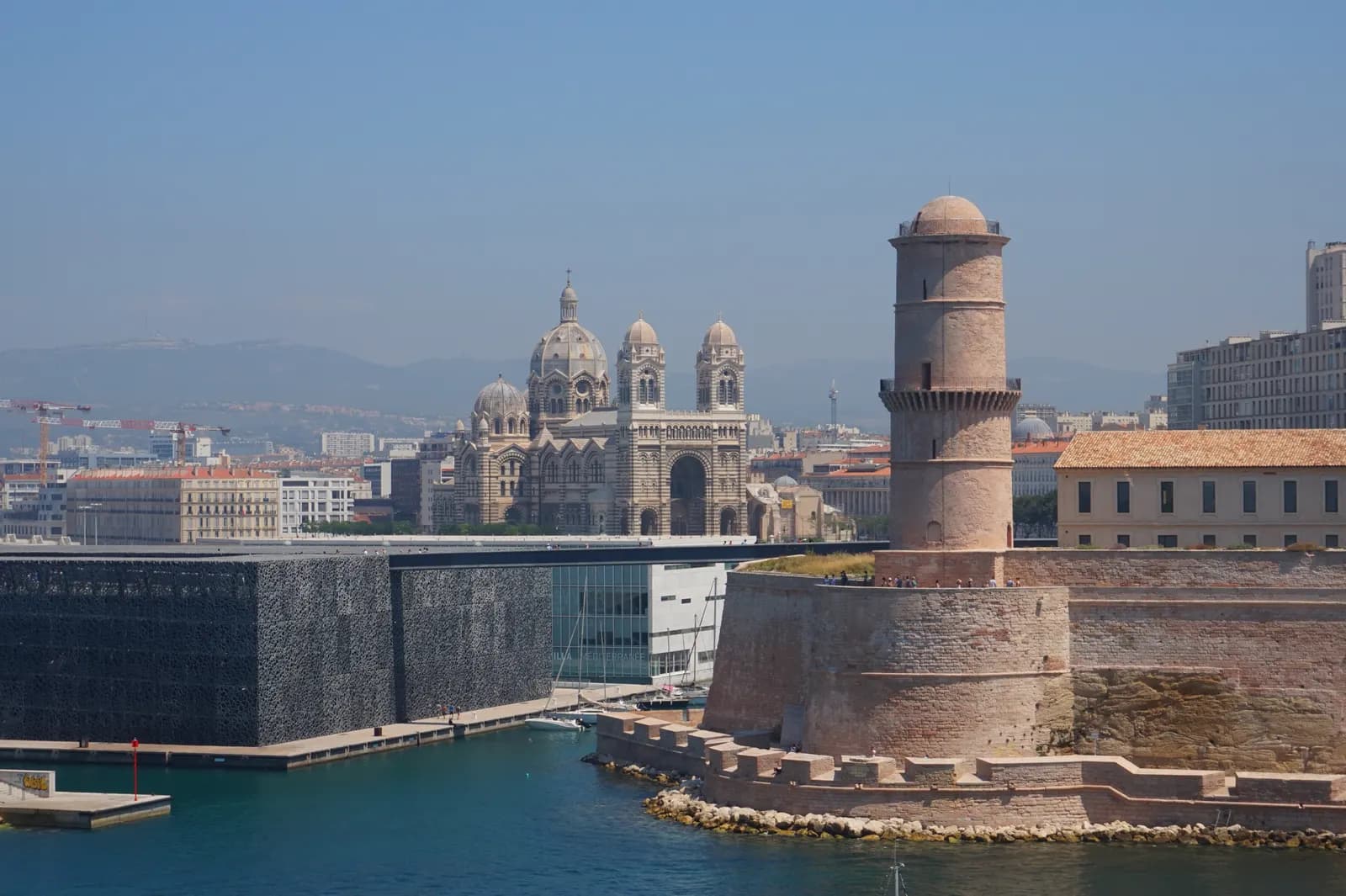
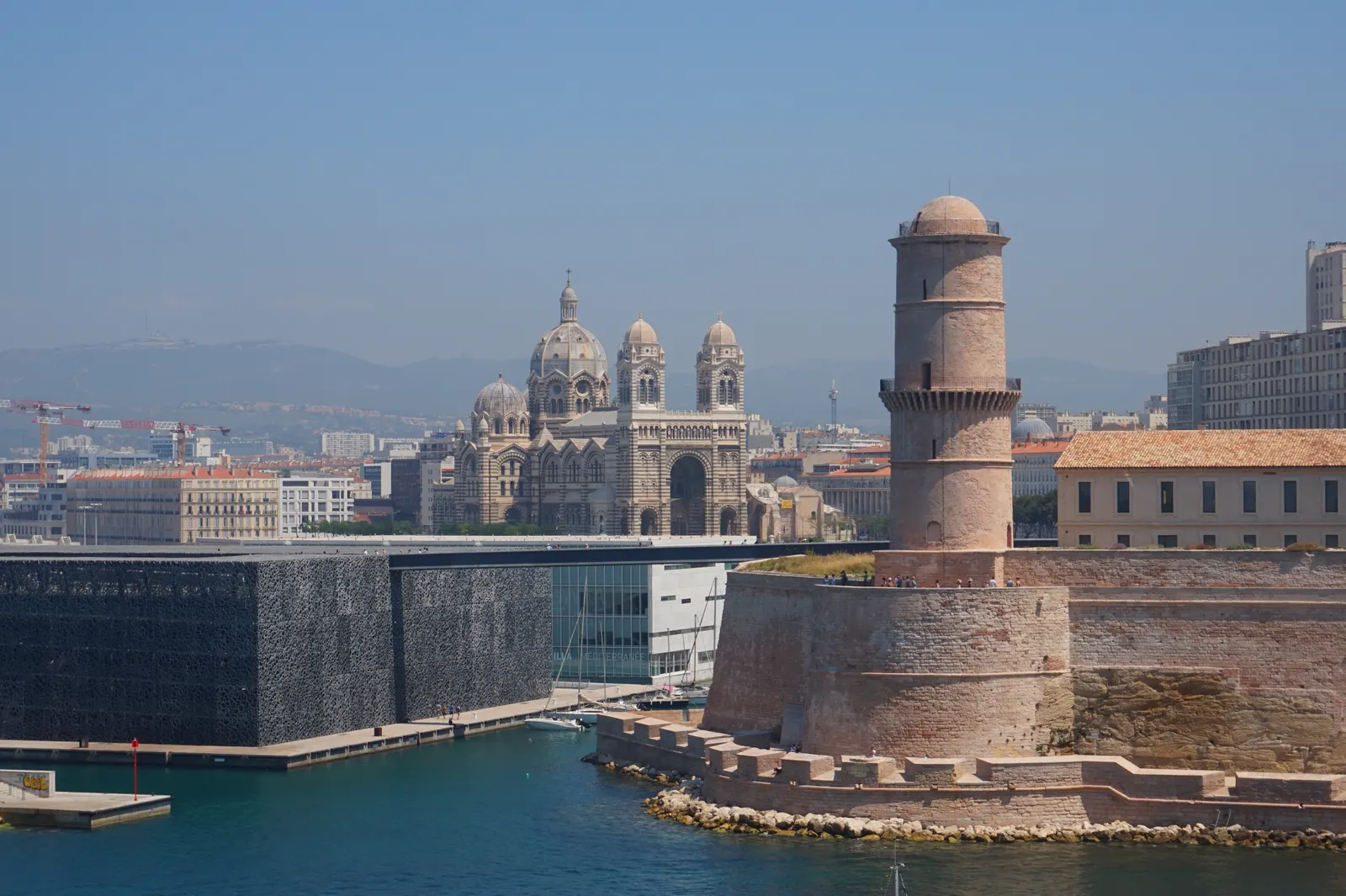
The dark latticework of the MuCEM museum and the tower of Fort Saint-Jean at the entrance to the Vieux-Port, with the striped Marseille cathedral behind
Photographed in 2018. Photo: Olena Ilnytska, CC BY-SA 4.0, via Wikimedia Commons

La Joliette and Euroméditerranée

North of the harbour, where the MuCEM and the tower of Fort Saint-Jean stand at the port mouth under the striped cathedral. It suits a stay with a car that leaves the city during the day.

Marseille Provence airport
about 24 km
Vieux-Port
about 2 km

Car and parking

Inside the low-emission zone, where the métropole allows Crit'Air 0 to 3 to drive and park. The city tariff applies in the marked streets, with 4 hours 30 the maximum on a yellow or orange street and 2 hours 30 on a red one.

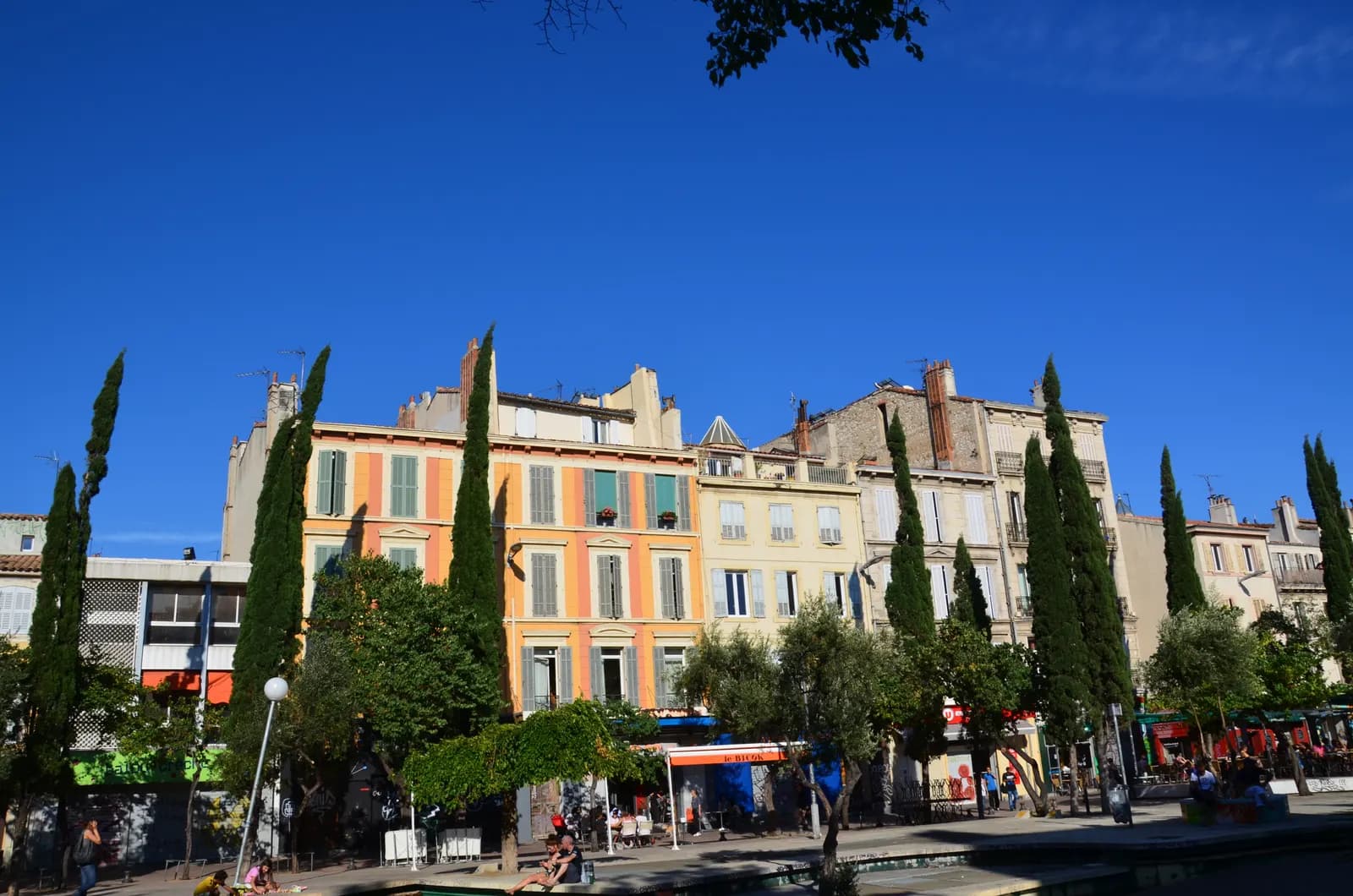
The Cours Julien in Marseille, a long pedestrian square with cypresses and plane trees in front of painted house fronts and street level bars
Photographed in 2011. Photo: DC, CC BY-SA 3.0, via Wikimedia Commons

Notre-Dame-du-Mont and Cours Julien

The long pedestrian Cours Julien, cypresses and plane trees in front of painted house fronts and street-level bars, on the slope east of the Canebière. It suits travellers who want the evenings and are happy to walk down to the port.

Marseille Provence airport
about 27 km
Vieux-Port
about 2 km

Car and parking

Inside the low-emission zone. Streets here fall in the orange or the yellow tariff zone depending on the address, and red short-duration lanes cap a stop at 2 hours 30, with a EUR 17 charge if it is overrun.

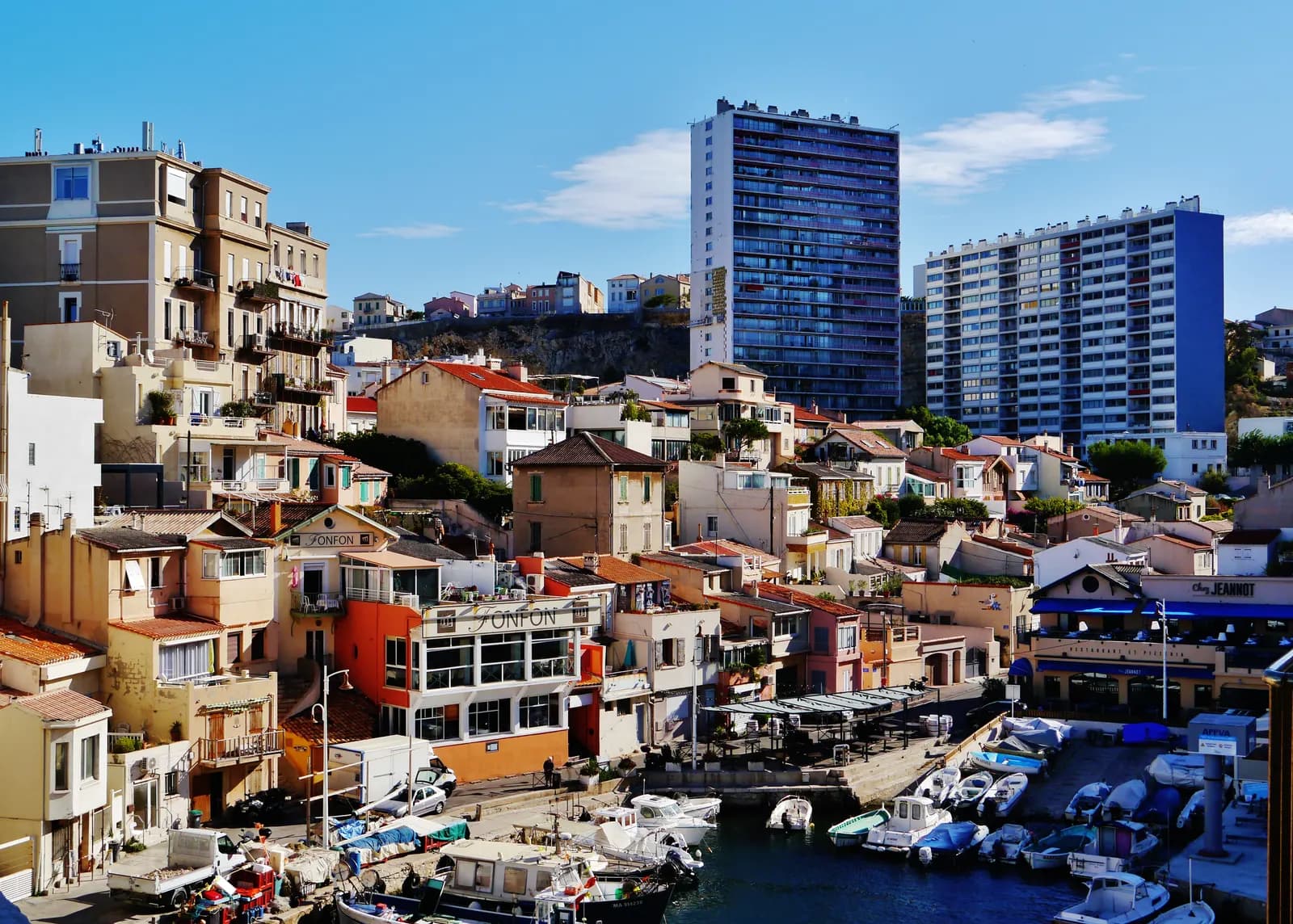
The fishing harbour of the Vallon des Auffes below the Corniche in Marseille, with small boats, quayside restaurants and tower blocks on the cliff above
Photographed in 2021. Photo: Zairon, CC BY-SA 4.0, via Wikimedia Commons

The Corniche, Endoume and Les Catalans

The coast road running south from the harbour, with the fishing harbour of the Vallon des Auffes below it, quayside restaurants and blocks on the cliff above. It suits a stay that wants the sea without leaving the city.

Marseille Provence airport
about 27 km
Vieux-Port
about 3 km

Car and parking

The low-emission zone is bounded by the named boulevards, and anywhere inside it the métropole bars Crit'Air 4, 5 and unclassified vehicles. City parking rules apply as elsewhere, with 24 consecutive hours the maximum on any one space.

Castellane and the Prado

The southern boulevards around Castellane and the avenue du Prado, which itself forms part of the low-emission zone boundary. It suits a stay of a week or a month about 2 km from the Vieux-Port.

Marseille Provence airport
about 27 km
Vieux-Port
about 2 km

Car and parking

Inside the low-emission zone, with the yellow or the orange tariff by street and a EUR 17 charge for overrunning. No car may stand on one space for more than 24 consecutive hours.

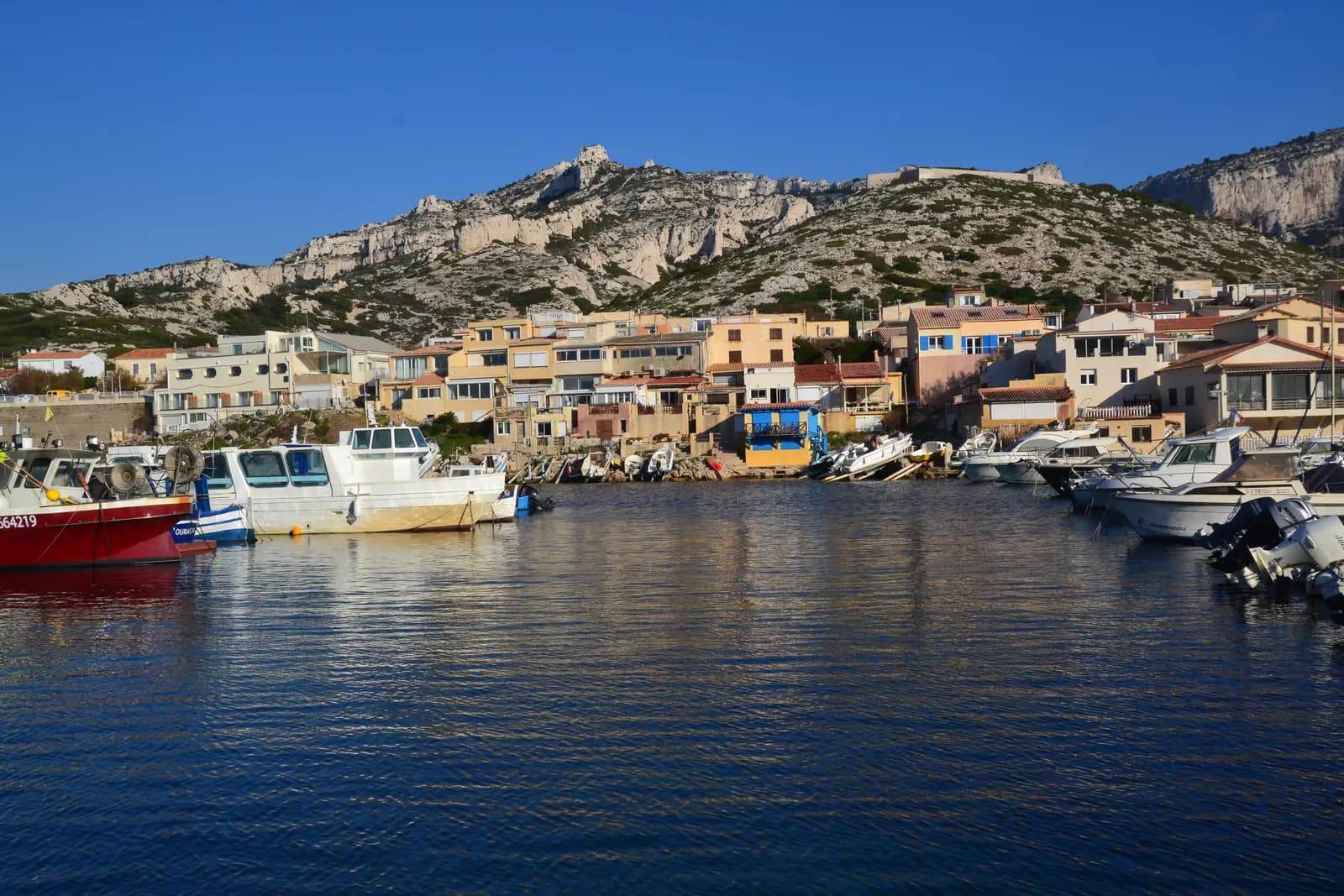
The small harbour of Les Goudes at the southern end of Marseille, with fishing boats, low white houses and the bare limestone ridge of the Calanques behind
Photographed in 2018. Photo: Jeanne Menjoulet from Paris, France, CC BY 2.0, via Wikimedia Commons

Les Goudes and the Calanques road

The small harbour at the southern tip of the city, fishing boats and low white houses under the bare limestone ridge, the last village before the national park. It suits walkers who want the Calanques from the doorstep.

Marseille Provence airport
about 38 km
Vieux-Port
about 11 km

Car and parking

Well outside the low-emission zone. The national park funnels arrivals into the reshaped Goudes-Napoléon car park, keeps barriers and control points at Logisson, Callelongue, Les Baumettes and Sormiou, and has closed Cap Croisette to cars since March 2021. From 1 June to 30 September a red fire-risk day closes the massifs to everyone on land.

Guides

Questions

How much is the tourist tax in Marseille?

On the city's rate sheet in force since 1 January 2023, per person per night, additions included: EUR 5.76 in a palace, EUR 4.32 at 5 stars, EUR 3.25 at 4 stars, EUR 2.16 at 3 stars, EUR 1.30 at 2 stars and EUR 1.09 at 1 star. Whether a later sheet replaces it was unverified as of September 2026.

What does an unclassified flat pay?

Under the 2023 rate sheet, 5.76 per cent of the cost of the night per person before tax, which is the city's 4 per cent plus the departmental and regional additions, capped at EUR 5.76 per person per night.

Can a hire car drive into the Marseille low-emission zone?

The métropole bars only Crit'Air 4, Crit'Air 5 and unclassified vehicles from driving or parking inside the perimeter, so check the sticker on the rental. Parliament voted to repeal the zones in the law of 26 May 2026; whether this one is still enforced was unverified as of September 2026.

How long can a car stay in one street space?

Twenty-four consecutive hours anywhere in the city, and inside the paid zone four and a half hours on a yellow or orange street and two and a half on a red one. The charge for overrunning is EUR 17.

Can you drive into the Calanques in summer?

From 1 June to 30 September the prefecture rates the fire risk for each massif between 5pm and 6pm for the next day, and on a red day land access to the national park is forbidden. Several roads are closed to cars permanently.