Where to stay in Girona
Girona's old quarter is closed by bollards and the town sits inside a weekday low-emission zone. On the Costa Brava, the villages run their own camera controls and summer parking.
Last checked
How the areas differ
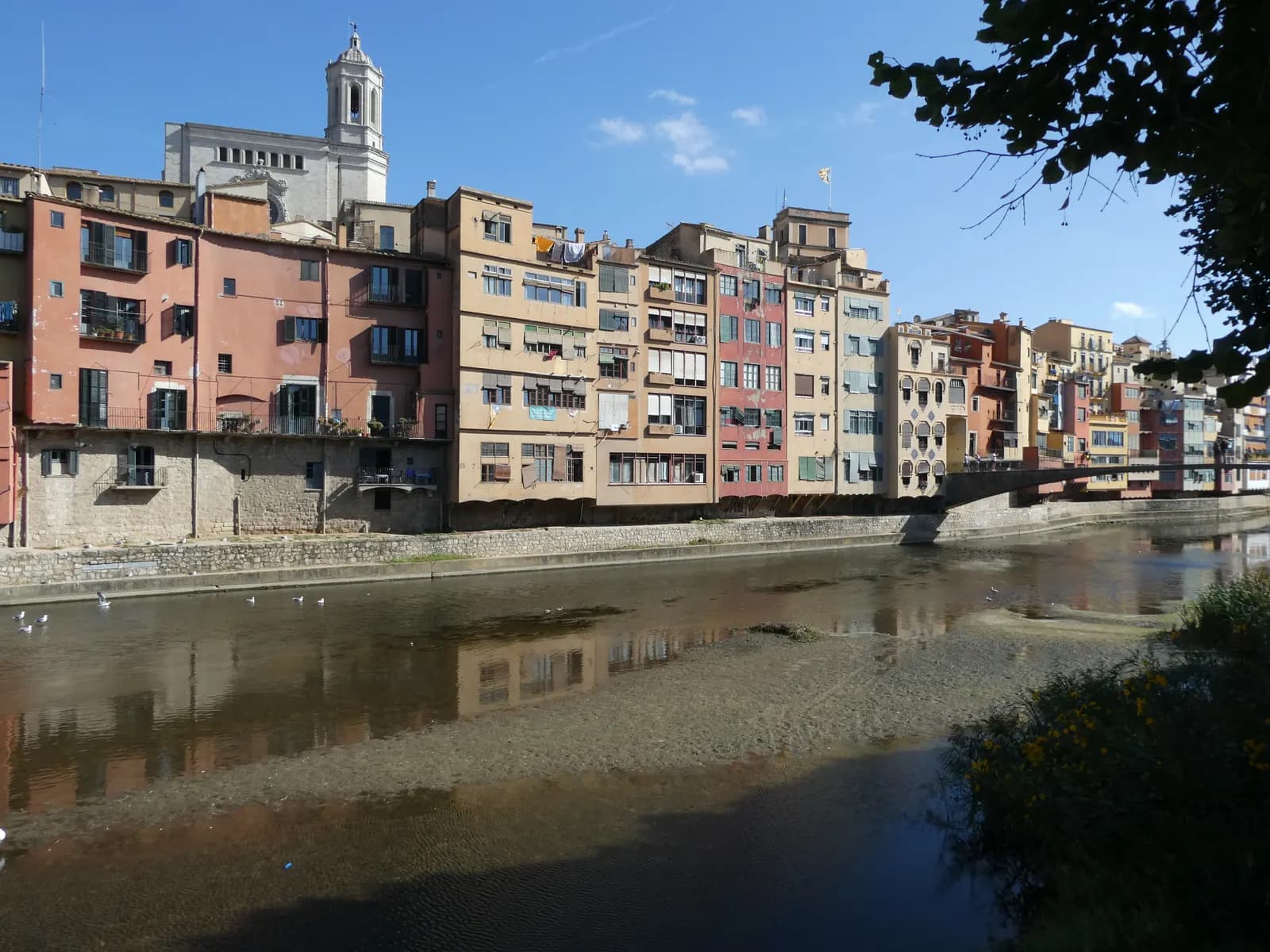
The Barri Vell is the old quarter on the hill east of the Onyar: the cathedral, the Call and the walls, in steep and stepped streets. Across the river, the Mercadal and the Eixample are flat shopping districts around the Plaça de la Independència, with the station on their side of town. Between them, the town is small enough to walk end to end.
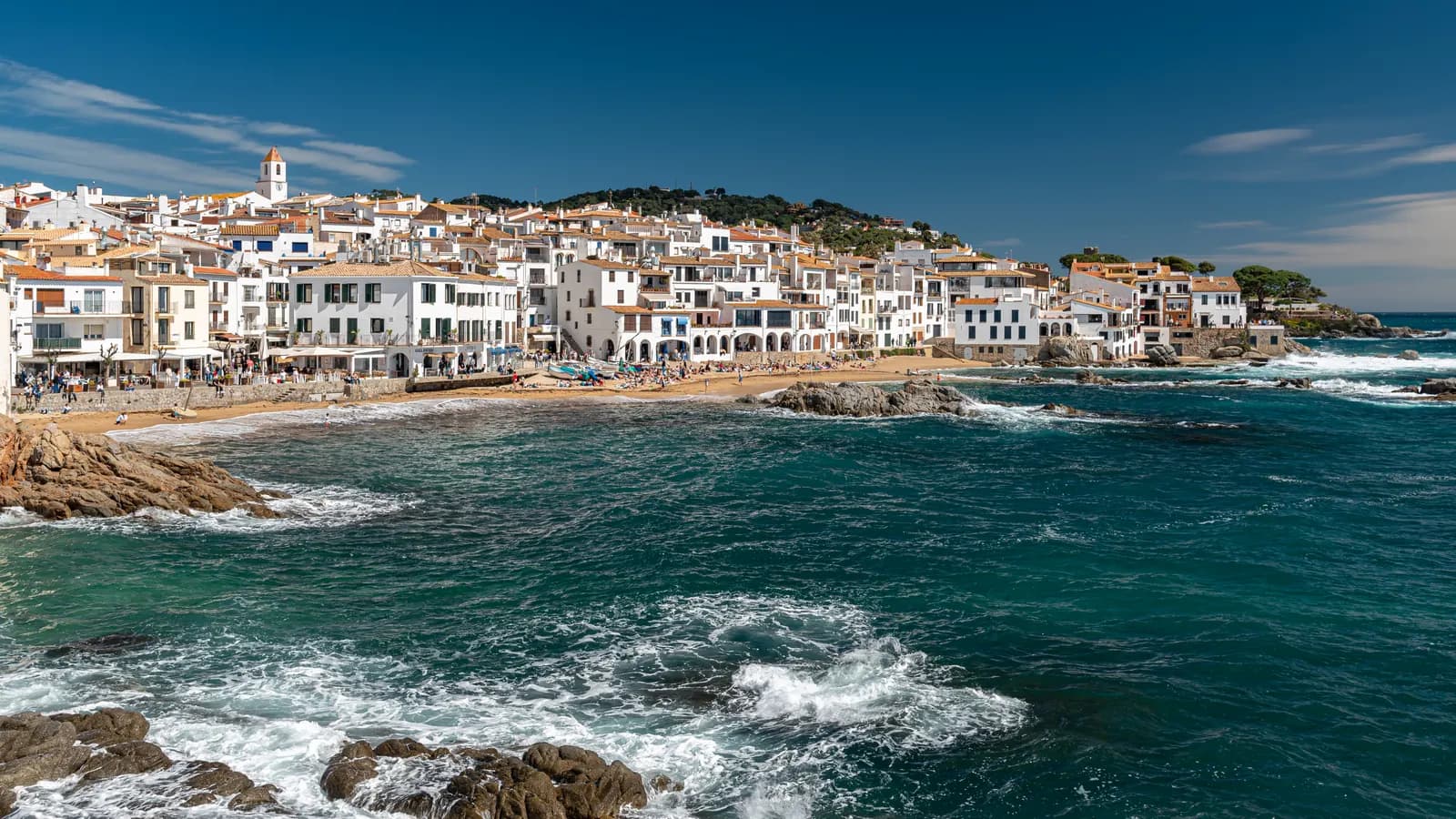
The coast is a separate choice. Tossa de Mar, about 39 km from Girona by road, is a beach town below a walled headland. Calella de Palafrugell and Llafranc, about 56 km away, are two small villages of white houses and coves. Begur, about 52 km away, is a hill town above the coves of Sa Riera, Sa Tuna and Aiguablava.
Staying with a rental car
Girona's low-emission zone has run since 15 September 2025, on working days from 07:00 to 20:00, inside a perimeter from the Devesa park to Carrer d'Emili Grahit and from the Riu Güell to Carrer del Carme and the Barri Vell. Cars with a B, C, ECO or 0 label enter freely, wherever they are from; foreign-plated cars that meet the emission requirements are exempt, and cameras read the plates, so no sticker is needed. The fine is EUR 200, EUR 100 within 20 days. Weekends and holidays are free of restrictions.
The Barri Vell is stricter. The entry at Plaça Catalunya is camera-controlled, and other entrances have automatic bollards that open for residents and users of the car parks inside. On the street, the blue zone allows 2 hours at most, and green-zone spaces give residents priority.
On the coast, Palafrugell fines unauthorised cars entering the centre of Calella by Carrer de Chopitea and the Passeig de Cípsela in Llafranc, and its summer blue zone runs every day from 15 June to 15 September. Begur runs a beach bus in summer and charges EUR 3 a day at the Sa Tuna car park from June to September. For the tolls, the AP-7 and the summer road closures further north, GetCar's guide Driving in Girona covers the road side in full.
What the tourist tax and registration rules mean for a guest
Catalonia charges a tax on stays in tourist lodging, collected by the establishment on its invoice. Outside Barcelona the rates from 1 April 2026 to 31 March 2027 are EUR 4.50 per person per night in five-star hotels, EUR 1.80 in four-star hotels, EUR 1.75 in a tourist flat, EUR 0.80 in youth hostels and EUR 0.90 in campsites and all other establishments. It counts at most 7 nights of a continuous stay in one establishment, and guests aged 16 and under are exempt. The Catalan tax agency lists municipal surcharges only for Barcelona and four other towns from 1 October 2026; Girona is not among them.
A tourist flat, a HUT in Catalan, is a whole home let for a continuous stay of 31 days or less. It must display its Catalan tourism register number, the NIRTC, with its maximum capacity and an assistance phone, and hand guests the building's community rules, where it has them, in Catalan, Spanish, English and French. Platforms must check the number, show it in every advert and refuse adverts without it.
Girona's council states that it admits no new tourist-flat applications until its planning is adapted to Catalan Decree-law 3/2023, so supply rests on flats already registered. At national level, the national registration procedure was largely annulled in May 2026, regional registers still apply, and whether a national number must still appear on a listing is unsettled as of September 2026. Every lodging records guest ID data under Real Decreto 933/2021.
When to book what
The Catalan rates rise on 1 April 2027, to EUR 2.50 in a tourist flat and EUR 1.20 in hotels of three stars or fewer. A stay booked in advance keeps the rate in force at booking if the booking and the tax are paid at that moment.
On the coast, the summer rules run from mid June to mid September: Palafrugell's blue zone from 15 June to 15 September, and Begur's beach bus from 13 June to 13 September in 2026. In Girona itself, the Temps de Flors flower festival ran from 9 to 17 May 2026; the 2027 dates were not published when this guide was checked.
Which area for which trip
A first visit on foot: the Barri Vell.
A car that stays close, or a longer stay in town: the Mercadal and the Eixample.
A beach holiday with an old town: Tossa de Mar.
Quiet coves and a village: Calella de Palafrugell and Llafranc.
A villa and a car: Begur.
Questions
Can a rental car enter Girona's low-emission zone?
Cars with a B, C, ECO or 0 label enter freely, wherever they are from. The zone runs on working days from 07:00 to 20:00, and the fine is EUR 200.
How long can a car stay in a Girona street space?
In the blue zone, as long as the sign says, 2 hours at most. Green-zone spaces give residents priority.
What does a tourist flat cost in tax per night?
EUR 1.75 per person per night outside Barcelona from 1 April 2026, for at most 7 nights. Guests aged 16 and under pay nothing.
What is an NIRTC number?
The Catalan tourism register number of a tourist flat. It is displayed inside the flat, and platforms must show it in every advert.
Can a car park in Calella de Palafrugell?
Cameras fine unauthorised cars entering the centre of Calella by Carrer de Chopitea. The summer blue zone runs from 15 June to 15 September, 09:00 to 21:00, at EUR 1.50 for 63 minutes.