Where to stay in Casablanca
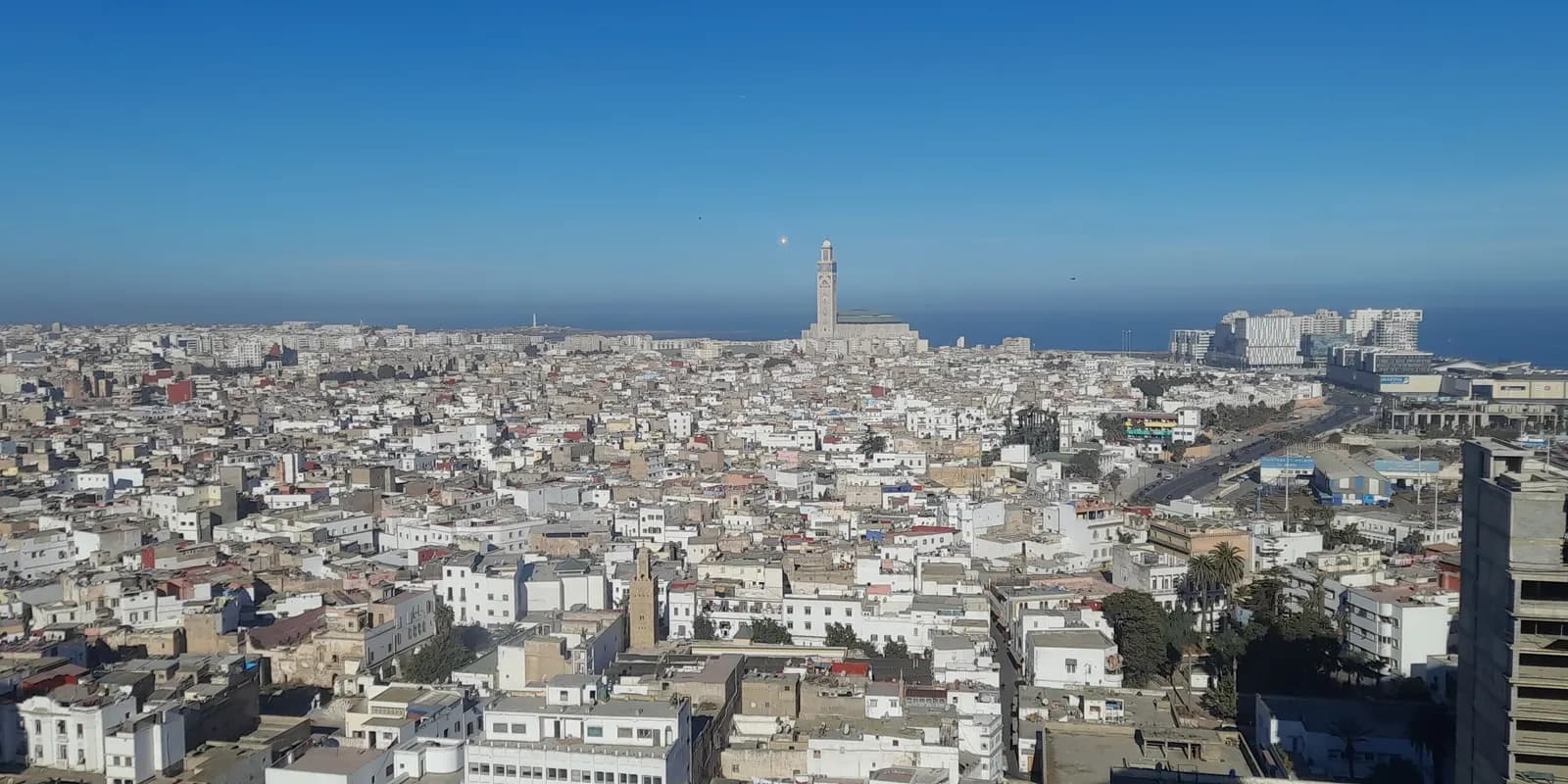
Casablanca, the economic capital of Morocco, sorts its districts by what they do: the centre and Maârif for business, shops and trams, Anfa for quieter streets, the Corniche for the sea.
Last checked
How the districts differ
The national tourist office sends visitors to the centre and its art deco buildings, to the old medina, one of the most recent medinas built in Morocco, and to the Hassan II Mosque, built on the water. United Nations Square sits at the heart of the centre, and the mosque is about 3 km away by road.
Maârif grew from 1914 as a European suburb. Its district council now describes it as a hub of commerce and services next to the business centre, with homes, workshops and offices side by side.
Anfa, the ancient name of Casablanca, is today a large district west of the centre. It takes in residential quarters such as Racine and Anfa Supérieur, and the beach at Aïn Diab lies within it.
The Corniche at Aïn Diab is the seafront. The tourist office describes private beach complexes, water parks and a coastline lined with cafés, restaurants and clubs; the Lalla Meryem and Aïn Diab beaches are there, with the island shrine of Sidi Abderrahman offshore.
Staying with a rental car
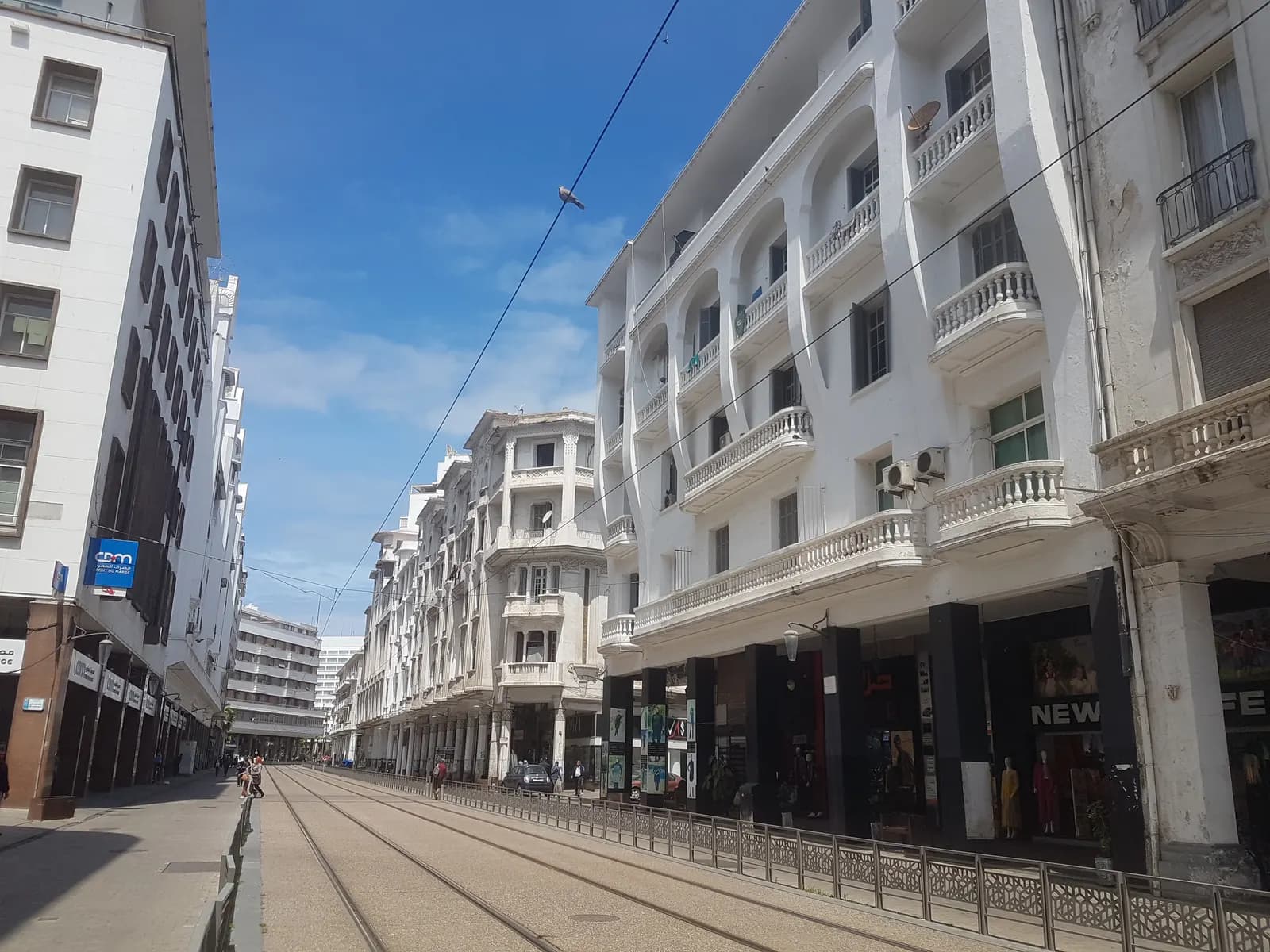
The commune has handed paid parking to its company Casa Baia, on the street and in closed car parks. Its plan sets regulated zones of nearly 40,000 places in the centre and its extensions, among them Maârif, Belvédère, Roches Noires, the medina and Bourgogne. Street meters cost 2 DH an hour, and the clamp fine is 30 DH.
Casa Baia's closed car parks charge 5 DH for the first hour. For 12 to 24 hours they charge 30 DH at the Boulevard Mohammed V and Corniche car parks, among others, and 40 DH at Place Mohammed V and Place Rachidi. For the Hassan II Mosque, the mosque has its own underground car park for about 800 cars, reached from Boulevard Moulay Youssef.
Outside the metered districts, the commune said in July 2020 that the parking places it leases out in the other districts charge 3 DH for a car for any length of stay, which can rise at night, with the tariff posted on signs, and that the rule also applies on the Corniche in summer. How that system works today is unverified as of September 2026.
Watch the trams. Casablanca's tram operator reminds drivers that trams and busways have absolute priority at junctions and platform crossings; it counted 314 accidents on the tram platform in 2025 and asks drivers never to drive or park on the platforms. For the motorways and tolls, GetCar's guide Driving in Casablanca: the Airport, Motorway Tolls, Parking and the Trams covers the road side; Rabat is 25 MAD away by motorway and the airport 7 MAD.
What the tourist tax and check-in rules mean for a guest
Morocco's taxe de séjour is charged per person per night on top of the room price, and each commune sets its rate inside national ranges. Casablanca's tax page lists 25 DH in a 5-star hotel, 10 DH in a 4-star, 7 DH in a 3-star, 5 DH in a 2 or 1-star hotel and 30 DH in a guest house. The page carries no date, but every amount sits inside the current national ranges. Children under 12 are exempt, and the invoice must show the tax on its own line.
Hotels and guest houses need an operating authorisation under Law 80-14. At check-in each guest shows a passport and signs an individual registration form, the fiche de police, and the host declares the data electronically to the national police or the Gendarmerie every day before 8:00. Since Law 07-20 the tax also covers flats rented by their owners to tourists, including through online platforms.
When to book what
The car can wait for the day trips. From Mohammed V airport, 27 km south-west of downtown, the train to Casa Voyageurs runs every hour from 05:30 to 23:00, from 60 DH, and the station is a 5-minute walk from the terminal. By road, the airport authority advises 30 to 50 minutes.
Pick up a car on the day you leave the city, and book a room with parking if the car stays for the whole trip. Inside the city, the four tram lines run from 05:30 or 06:00 until 22:30.
Which district for which trip
A first visit, the art deco centre and the trains: the city centre.
Shops, restaurants and a lived-in district: Maârif.
Quieter residential streets between the centre and the sea: Anfa.
The beach and the nightlife: the Aïn Diab Corniche.
Questions
Which district of Casablanca is best for a first visit?
The city centre, around United Nations Square, close to the old medina, the art deco buildings, the trains and the trams. The Hassan II Mosque is about 3 km away by road.
How much do Casablanca car parks cost?
Casa Baia's closed car parks charge 5 DH for the first hour, and 30 or 40 DH for 12 to 24 hours depending on the car park. Street meters cost 2 DH an hour.
Can you park at the Hassan II Mosque?
Yes. The mosque has an underground car park for about 800 cars, reached from the Boulevard Sidi Mohammed Ben Abdellah roundabout and from Boulevard Moulay Youssef.
Do trams have priority over cars in Casablanca?
Yes, absolute priority at junctions and platform crossings, according to the tram operator, which also asks drivers never to drive or park on the platforms.
Is there a train from Casablanca airport to the city?
Yes. One train an hour runs to Casa Voyageurs from 05:30 to 23:00, from 60 DH, and the station is a 5-minute walk from the terminal.