Where to stay in Bilbao
Bilbao checks number plates at the edges of its low-emission zone, and its old town admits only registered vehicles. From 1 January 2027 Bizkaia also charges a tourist tax.
Last checked
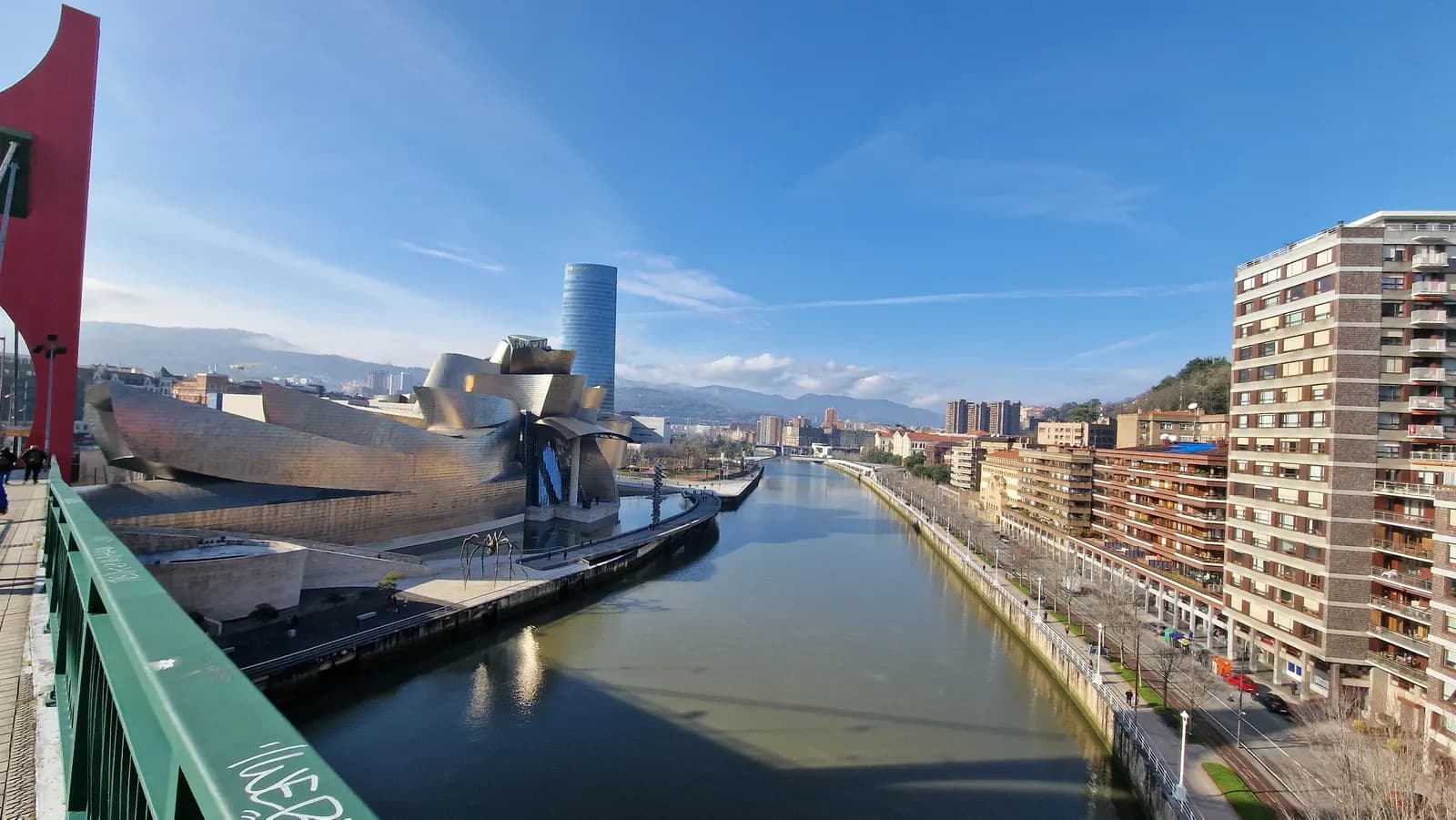
How the areas differ
The Casco Viejo is the old town of the Siete Calles, the Plaza Nueva and the Ribera market, beside the estuary. It is compact, full of pintxos bars and the natural base for a first visit on foot. Across the river, Abando is the grid of the Gran Vía and Plaza Moyua, with Abando station and, on the waterfront, the Guggenheim. Indautxu, west of Abando, is residential and commercial.
Deusto, across the estuary from Abando, is the university district and quieter at night. Getxo is a separate town at the mouth of the estuary, with beaches and the Bizkaia transporter bridge, about 13 km from the Casco Viejo by road.
Staying with a rental car
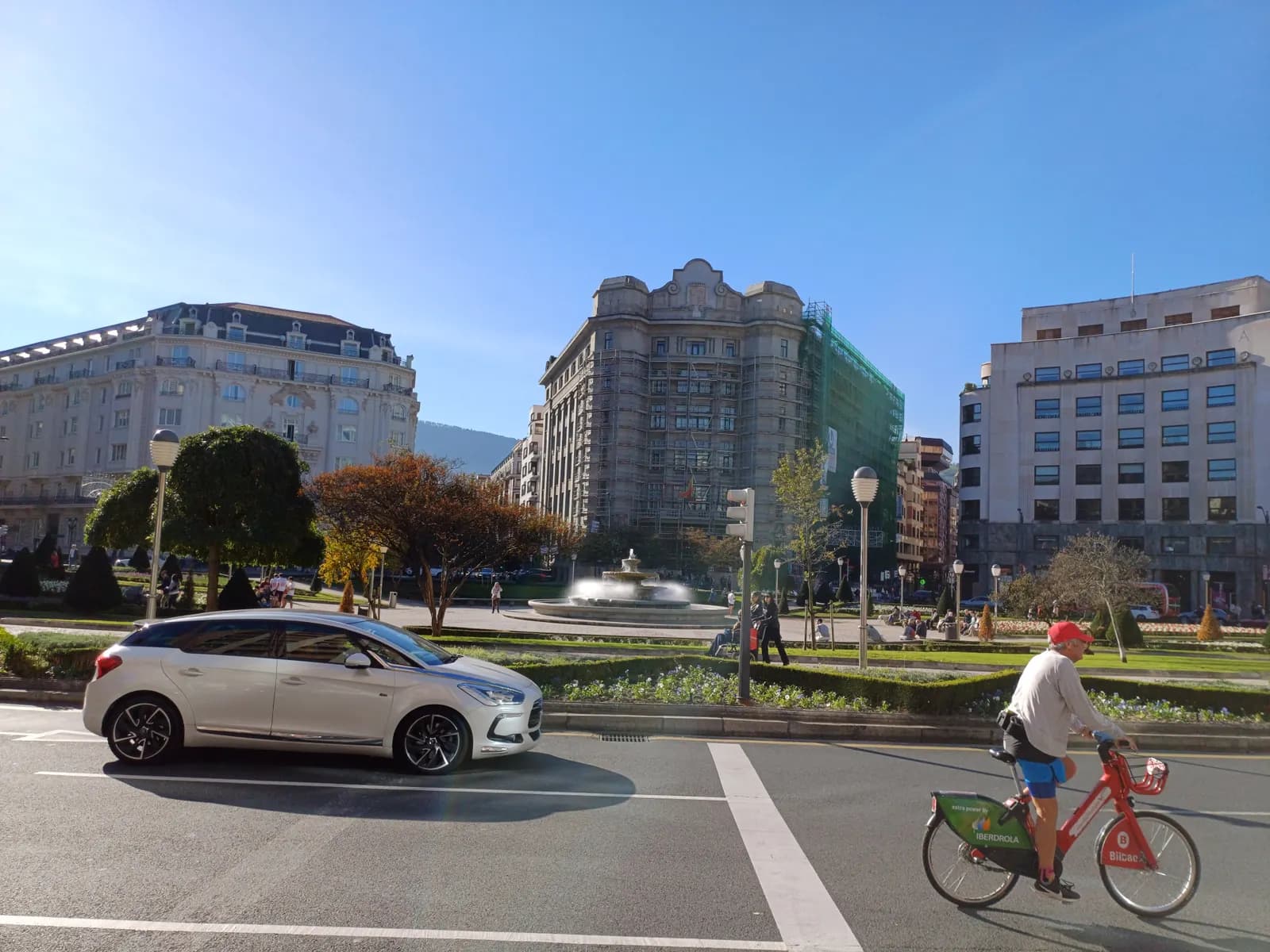
Bilbao's low-emission zone runs on cameras that read plates and check them against the DGT register, so no sticker is needed. Cars with a 0, ECO or C label enter freely; cars with no label are barred, and B-label cars have been barred since 15 June 2025. Ask at the rental desk which label the car carries. For foreign-plated cars that fall under the ban, the city lists two exceptions: a booking at a hotel inside the zone that arranges the authorisation, and, for cars equivalent to a B label, a signposted car park inside the zone until 31 December 2029. The zone's perimeter and fine were not read on an official page.
The Casco Viejo is stricter: since 1 September 2022, 30 cameras have watched its entrances and only registered vehicles may enter, according to press reports. Leave the car outside and walk in.
For a car that stays out of the centre by day, the transport consortium runs park and rides at the Leioa, Etxebarri, Ibarbengoa and Ansio metro stations, with a discounted rate for metro users and EUR 0.05 a minute otherwise. They are not garages: the car must leave before the station closes. At the airport, 12 km from the city according to Aena, the rental desks and cars are in the general car park. For the AP-8 and AP-68 tolls and the day trips, GetCar's guide Driving in Bilbao covers the road side in full.
What the tourist tax and registration rules mean for a guest
No tourist tax is charged in Bilbao in 2026. Bizkaia's Norma Foral 3/2026, published on 26 June 2026, creates a tax on tourist stays in every municipality of the territory with effect from 1 January 2027. Each town sets its rates by ordinance within ranges per night: EUR 4.50 to 6.50 in five-star hotels and in tourist-use flats, EUR 3.50 to 5.50 in four-star hotels, EUR 1.50 to 3.50 in three-star hotels and tourist apartments, and less in one-star and two-star hotels, pensions, campsites and albergues. It counts at most 6 nights of a continuous stay in one establishment. If a town has no ordinance on 1 January 2027, the maximum rates apply, and towns with 750 or more tourist beds may add a surcharge of up to 50%. Bilbao's ordinance was not found.
People under 18 are exempt, as are people with a disability of 65% or more or dependency of grade II or III and one person accompanying each of them, health stays, study stays organised by Basque public bodies, publicly subsidised stays and force majeure. Stays booked before 5 February 2026 are not taxed.
Tourist flats follow Basque Decreto 101/2018. Each has a number in the REATE register that must appear in every advert, and platforms must check the number and show it. The building carries an official badge outside and another next to the flat's door, and the operator holds liability insurance of at least EUR 35,000 per place. At national level, the national registration procedure was largely annulled in May 2026, regional registers still apply, and whether a national number must still appear on a listing is unsettled as of September 2026. Every lodging records guest ID data under Real Decreto 933/2021.
When to book what
The date of the stay decides the tax: nights from 1 January 2027 are taxed, unless the booking was made before 5 February 2026. Bilbao's own rates were not found when this guide was checked, so the amount for 2027 stays is unknown.
With cameras on the Casco Viejo and a plate-read zone around the centre, a car-friendly base is a question for the hotel: ask whether it lies inside the zone and where guests park.
Which area for which trip
A first visit on foot: the Casco Viejo, with the car parked outside it.
Shops, transport and the Guggenheim: Abando.
A longer stay in local streets: Indautxu.
A quieter base across the river: Deusto.
The sea, with Bilbao a ride away: Getxo.
Questions
Can a car drive into Bilbao's Casco Viejo?
Only registered vehicles, according to press reports: since 1 September 2022, 30 cameras have watched its entrances. Leave the car outside and walk in.
Which cars may enter the low-emission zone?
Cars with a 0, ECO or C label. Cars with no label are barred, and B-label cars since 15 June 2025.
Where can a car stay by day outside the centre?
At the metro park and rides at Leioa, Etxebarri, Ibarbengoa and Ansio, at a discounted rate for metro users or EUR 0.05 a minute otherwise. The car must leave before the station closes.
How much will the Bilbao tourist tax be?
Bilbao's rates were not found. Bizkaia's law sets ranges, EUR 4.50 to 6.50 a night in a tourist flat, for at most 6 nights, from 1 January 2027.
What is a REATE number?
The registration number of a tourist flat in the Basque register of tourist businesses and activities. It must appear in every advert for the flat.