Where to stay in Cape Town
Cape Town's areas run from the City Bowl below Table Mountain to Atlantic beaches, False Bay and the Winelands towns of Stellenbosch and Franschhoek, and the drive from the airport, about 20 km from the centre by road, is the first thing to plan.
Last checked
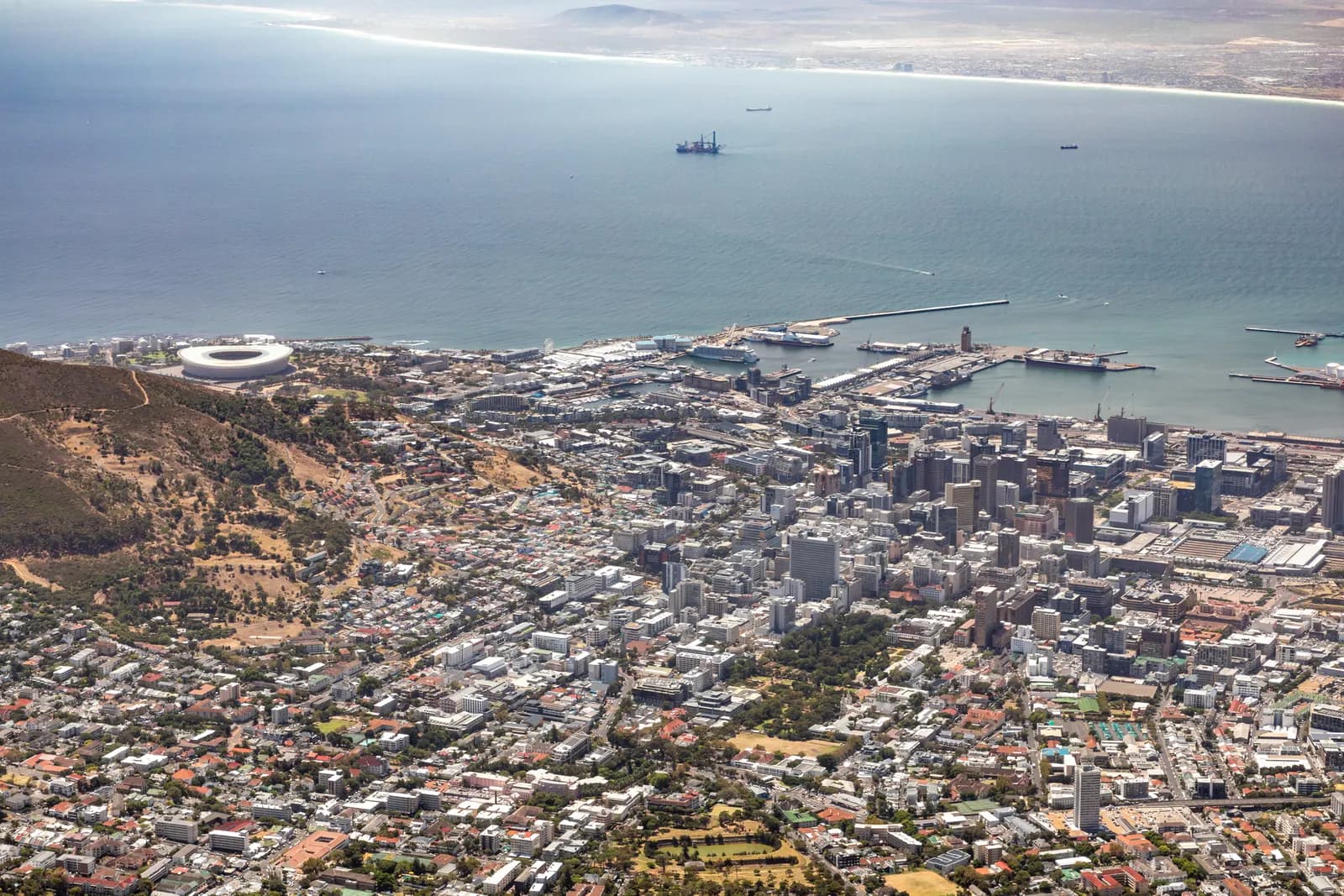
How the areas differ
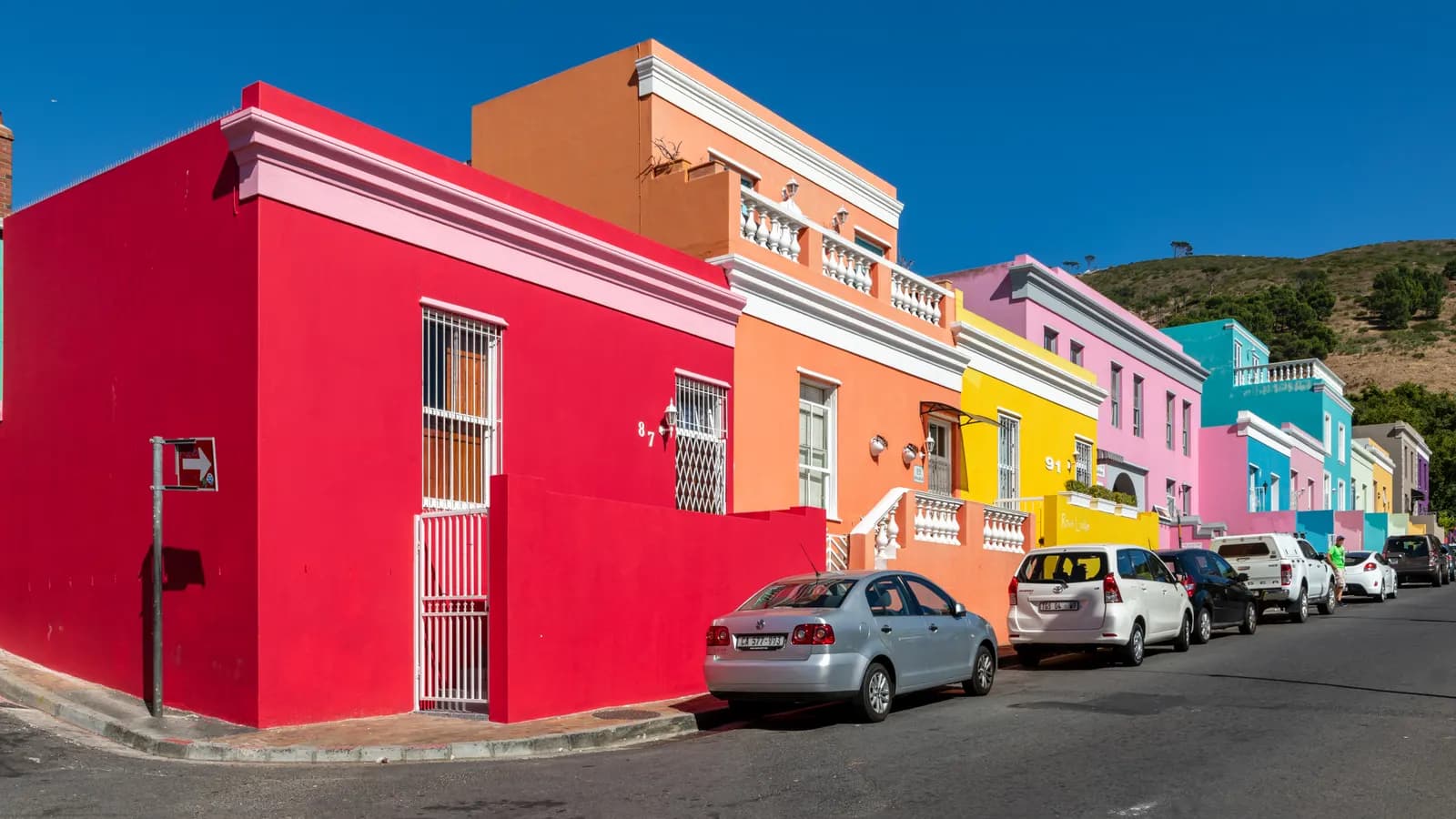
The City Bowl holds the central business district below Table Mountain, Bo-Kaap's brightly coloured houses on the slopes of Signal Hill, and Gardens, mostly residential, with Company's Garden and Kloof Street. The V&A Waterfront, about 4 km away by road, is a working harbour with a large mall, a marina, apartments and hotels, the city's most visited attraction, and Green Point beside it has Cape Town Stadium and the promenade to Sea Point.
Sea Point is a densely populated suburb between Signal Hill and the Atlantic, with the promenade along the shore. Camps Bay, about 5 km away by road on the same Atlantic coast, is an affluent suburb on a small bay below the Twelve Apostles, busy with visitors in summer.
On the False Bay side, Muizenberg is the city's main surfing spot, Kalk Bay a fishing village with a harbour, and Simon's Town the naval town with Boulders Beach and its African penguins, 26 to 39 km from the centre. Inland, Stellenbosch, founded in 1679, sits among wine farms about 34 km from the airport, and Franschhoek, one of the oldest towns in the country, lies about 34 km beyond it.
Staying with a rental car
Start with the airport road. UK travel advice, updated in July 2026, reports an increase in attacks on the way to and from the airport, including on visitors in hired cars, and advises staying on the N2 and M3 rather than the R300, using the airport approach road at exit 16 rather than Borcherd's Quarry Road, and not following satnav routes off the main roads. It also advises parking in well-lit areas with no valuables in the car, and lists the MyCiTi bus in the CBD and on the Atlantic Seaboard among the safer ways to get around.
In the CBD, Sea Point, Claremont and Bellville, the City's contractor runs paid street parking: the driver pays the marshal up front, and signs give the time limit and the tariff; if no marshal comes after a few minutes, pay on return. The V&A Waterfront runs its own garages, patrolled around the clock, where the first hour at Victoria Wharf cost ZAR 10 and 12 to 24 hours ZAR 120 on its April 2026 tariff. Stellenbosch Municipality handed parking in its town centre to the same contractor in 2019.
Chapman's Peak Drive, the toll road between Hout Bay and Noordhoek, closes in high winds and heavy rain, and the M3 through Muizenberg is one of the ways round (via GetCar). GetCar's guide Driving in Cape Town: the Airport Road, Speed Limits, 4-Way Stops, Chapman's Peak Toll, Parking and Safety covers the rules of the road.
What the taxes and rules mean for a guest
No municipal tourist tax was found as of September 2026. VAT is 15% on accommodation from a VAT-registered business; a host whose commercial accommodation brings in ZAR 120,000 or less a year is not treated as a VAT enterprise, so a small host's price may carry no VAT. The lease of a dwelling is exempt.
Some businesses add TOMSA, a 1% levy on the room rate that pays for the marketing of South Africa, shown on the bill as "Tourism Levy" with VAT on top. The scheme is voluntary for businesses, and TOMSA's own documents differ on the guest: its 2025 contributor agreement speaks of levies paid voluntarily by customers, while its 2020 guide says a traveller must pay it wherever it is collected.
The City of Cape Town regulates guest accommodation through its planning by-law. A bed and breakfast must have its owner living on the property and may let at most 3 rooms to no more than 6 guests, with parking on site; a guest house, which is larger, needs the City's consent in single residential zones. No City or national rule requiring a registration number on listings was found; a 2019 draft amendment to the Tourism Act would allow thresholds for short-term home sharing, but no enacted version was found as of September 2026.
When to book what
Entry comes first. UK, US and most EU passport holders can stay 90 days without a visa, but ordinary passports of Cyprus and Poland get 30 days. Since 1 July 2026 travellers, children included, must submit a customs declaration online before arriving or leaving, in the SATMS app or the SARS MobiApp. UK travel advice asks for a passport valid at least 30 days after departure, with two blank pages.
Camps Bay's beaches and restaurants draw locals and visitors in summer, so book the Atlantic coast early for those months.
Which area for which trip
A first visit on foot: the City Bowl.
Everything close by, with garages on site: the V&A Waterfront and Green Point.
A week or a month by the sea: Sea Point.
A beach holiday in a villa: Camps Bay.
Surf, a harbour and penguins: Muizenberg, Kalk Bay and Simon's Town.
Wine farms: Stellenbosch and Franschhoek.
Questions
Which roads should a driver take from Cape Town airport?
UK travel advice says to stay on the N2 and M3 rather than the R300, and to use the airport approach road at exit 16 rather than Borcherd's Quarry Road towards Nyanga.
How much is parking at the V&A Waterfront?
On its own tariff seen in April 2026, ZAR 10 for the first hour and ZAR 120 for 12 to 24 hours at the Victoria Wharf garage.
What is the TOMSA levy?
A 1% levy on the room rate that participating businesses collect for the marketing of South Africa, shown as "Tourism Levy" with VAT added. The scheme is voluntary for businesses.
How many guests can a Cape Town bed and breakfast take?
Under the City's planning by-law, at most 6 paying guests in no more than 3 rooms, and the owner must live on the property.
Do visitors to South Africa need to declare anything before travelling?
Yes. Since 1 July 2026 travellers entering or leaving must submit a customs declaration online first, in the SATMS app or the SARS MobiApp, apart from a few paper-based exceptions.